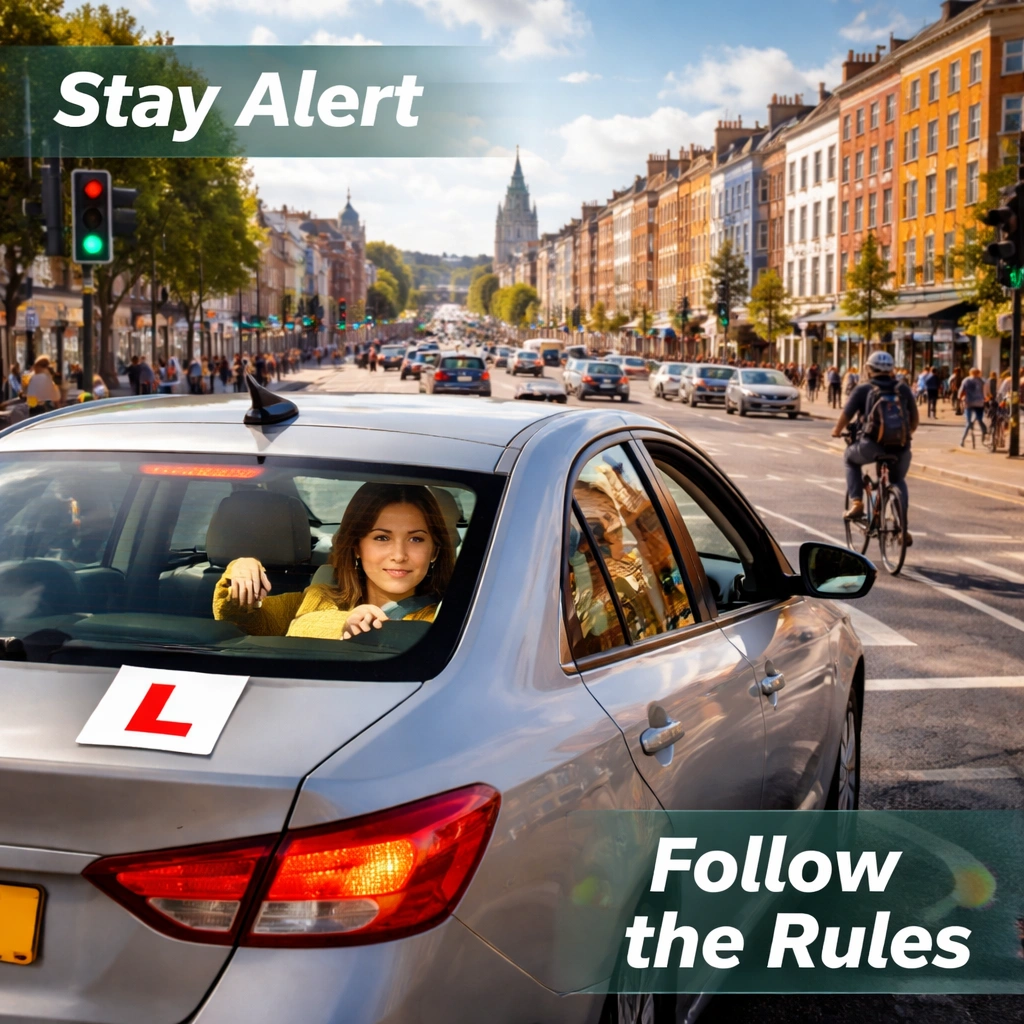
In short: On Ireland’s busy streets, defensive driving — anticipating other people’s mistakes, keeping space, staying visible and planning escape routes — is what stands between you and the crash that was not your fault. It is the difference between reacting to danger and never meeting it.
Driving in Ireland can be unpredictable. From narrow country roads to busy city streets, you never know what’s around the corner. That’s why defensive driving is one of the most important skills you can develop—whether you’re just starting out or have been driving for years.
In this guide, we’ll break down what defensive driving really means, why it matters on Irish roads, and how you can put it into practice to stay safe and confident behind the wheel.
Who This Is For
This guide is for:
- Learner drivers preparing for their driving test
- New drivers who want to build safe habits from the start
- Experienced drivers who want to sharpen their skills on busy Irish streets
- Anyone who wants to reduce their risk of accidents and drive with more confidence
What Is Defensive Driving?
Defensive driving is all about being aware, prepared, and proactive. It means expecting the unexpected—like a pedestrian stepping out suddenly, a car pulling out without indicating, or a cyclist weaving through traffic.
Instead of just reacting to hazards, defensive drivers anticipate them. This approach can help you:
- Avoid accidents before they happen
- Stay calm in stressful traffic situations
- Make better decisions on the road
- Pass your driving test with confidence
Why Defensive Driving Matters in Ireland
Ireland’s roads can be challenging. You might be navigating narrow streets in Dublin one day and winding rural roads the next. Add in unpredictable weather, busy roundabouts, and occasional jaywalking pedestrians, and it’s easy to see why defensive driving is essential.
According to the Road Safety Authority (RSA), human error is a factor in the majority of road accidents in Ireland. By practicing defensive driving, you can significantly reduce your risk of being involved in a collision.
How to Practice Defensive Driving: A Step-by-Step Guide
1. Keep a Safe Following Distance
Always leave enough space between you and the car in front. In dry conditions, aim for at least a 2-second gap. In wet or icy conditions, double that to 4 seconds.
Quick tip: Pick a fixed point on the road (like a sign or lamppost). When the car ahead passes it, count “one thousand and one, one thousand and two.” If you pass the point before finishing, you’re too close.
2. Scan the Road Ahead
Don’t just focus on the car in front of you. Look 10-15 seconds ahead to spot potential hazards early. This gives you more time to react.
Example: You’re driving through a busy town centre. Instead of just watching the car ahead, you notice a pedestrian about to cross between parked cars. You slow down in advance, avoiding a sudden stop.
3. Check Your Mirrors Regularly
Make it a habit to check your mirrors every 5-8 seconds, especially before changing speed or direction. This helps you stay aware of what’s happening around you.
Pro tip: Before braking, check your mirrors to make sure no one is tailgating you. If they are, brake more gently to give them time to react.
4. Anticipate Other Drivers’ Mistakes
Never assume other drivers will do what they’re supposed to. Expect the unexpected.
Scenario: You’re approaching a roundabout. Even if the car to your right should give way, be prepared for them to pull out. Slow down and be ready to stop.
5. Adjust for Weather and Road Conditions
Ireland’s weather can change in minutes. Reduce your speed in rain, fog, or low light. Increase your following distance and use your lights appropriately.
Remember: Wet roads can double your stopping distance. In icy conditions, it can be up to ten times longer.
6. Stay Calm and Patient
Rush hour traffic, roadworks, and inconsiderate drivers can test your patience. Take a deep breath, stay focused, and avoid aggressive driving.
Quick win: If someone cuts you off, resist the urge to react. Let it go and focus on your own driving.
Common Defensive Driving Mistakes (and How to Avoid Them)
1. Following Too Closely
Mistake: Driving too close to the car in front, leaving no time to react if they stop suddenly.
Solution: Use the 2-second rule (or 4 seconds in bad weather).
2. Not Checking Blind Spots
Mistake: Changing lanes without checking your blind spot, risking a collision with a cyclist or motorbike.
Solution: Always do a quick shoulder check before moving into another lane.
3. Speeding in Built-Up Areas
Mistake: Driving too fast in towns or cities where pedestrians and cyclists are common.
Solution: Stick to speed limits and slow down in areas with schools, shops, or heavy pedestrian traffic.
4. Getting Distracted
Mistake: Using your phone, adjusting the radio, or eating while driving.
Solution: Keep your focus on the road. If you need to do something, pull over safely first.
What to Expect in a Defensive Driving Lesson
At Epic Driving School, our instructors focus on building your awareness and decision-making skills. Here’s what a typical lesson might include:
- Situational awareness training: Learning to spot hazards early and plan your actions.
- City driving practice: Navigating busy streets, pedestrian crossings, and complex junctions.
- Roundabout and junction work: Mastering right-of-way rules and defensive positioning.
- Weather condition drills: Practicing safe driving in rain, fog, or low light.
Our instructors will give you real-time feedback and tips to help you build confidence and stay safe on the road.
Manual vs Automatic: Which Is Better for Defensive Driving?
Whether you choose manual or automatic, defensive driving principles remain the same. However, there are some differences to consider:
| Aspect | Manual | Automatic |
|---|---|---|
| Focus on the road | Requires more attention to gear changes | Allows more focus on hazards and surroundings |
| Control in bad weather | Better engine braking in snow/ice | Easier to manage in stop-start traffic |
| Learning curve | Steeper, but builds coordination | Simpler, quicker to get comfortable |
| Best for city driving | Can be tiring in heavy traffic | Less stressful in congested areas |
Why Choose Epic Driving School?
At Epic Driving School, we’re committed to helping you become a safe, confident driver. Here’s what sets us apart:
- Experienced instructors: Our ADI-approved instructors have years of experience teaching defensive driving techniques.
- Modern dual-control cars: Learn in a safe, comfortable environment with the latest safety features.
- Flexible lesson plans: We tailor our lessons to your needs, whether you’re a complete beginner or looking to brush up your skills.
- Competitive pricing: Quality driving lessons at affordable rates.
Ready to Drive Defensively?
Defensive driving isn’t just about passing your test—it’s about staying safe for life. Whether you’re just starting out or want to sharpen your skills, Epic Driving School is here to help.
Book your first lesson today and take the first step towards becoming a safer, more confident driver on Ireland’s roads.
Frequently Asked Questions
1. What is defensive driving?
Defensive driving is a set of skills that help you anticipate and avoid hazards on the road. It involves staying alert, keeping a safe distance, and expecting the unexpected.
2. How can I practice defensive driving as a learner?
Start by always scanning the road ahead, checking your mirrors regularly, and keeping a safe following distance. Your instructor will help you build these habits during lessons.
3. Is defensive driving part of the driving test?
While it’s not a separate test section, your examiner will assess your ability to drive safely and anticipate hazards—key aspects of defensive driving.
4. Can defensive driving help me pass my test faster?
Yes! By developing good habits early, you’ll be better prepared for the test and less likely to make mistakes under pressure.
5. Do I need special lessons for defensive driving?
Not necessarily. Most quality driving schools, including Epic Driving School, incorporate defensive driving techniques into their standard lessons.
6. What’s the difference between manual and automatic for defensive driving?
Both require the same defensive mindset. Automatic cars let you focus more on the road, while manual cars give you more control in certain conditions.
7. How can I stay calm in heavy traffic?
Practice deep breathing, keep a safe distance, and avoid rushing. Remember, arriving safely is more important than arriving quickly.
8. What should I do if another driver is being aggressive?
Stay calm, don’t engage, and focus on your own driving. If necessary, pull over safely and let them pass.