
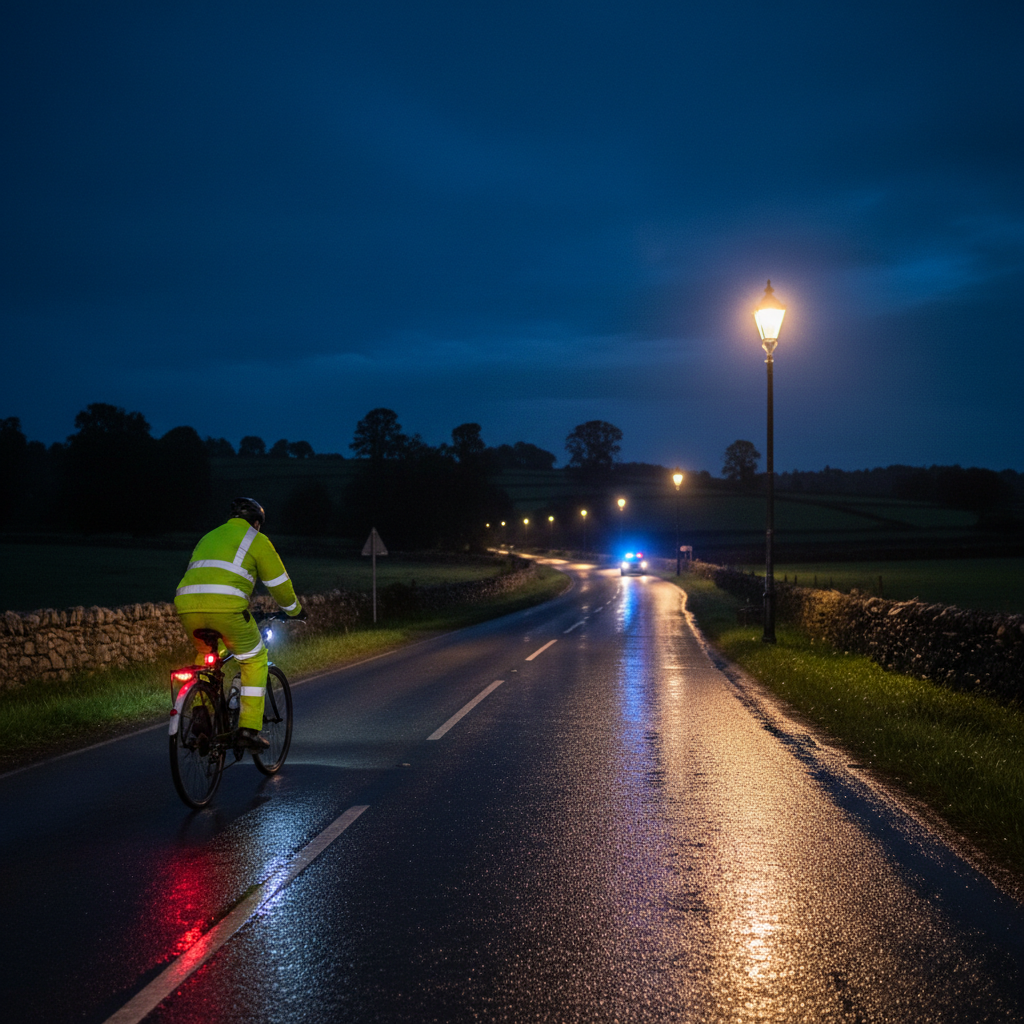
Why Gardaí and the RSA are urging cyclists to ‘light up’
As the evenings draw in and Irish weather brings low light and rain, the Gardaí together with the Road Safety Authority (RSA) are asking cyclists to make themselves as visible as possible. Lights, reflectors and high‑visibility clothing reduce the risk of collisions and make it easier for drivers — especially learner drivers — to spot vulnerable road users on narrow rural roads and busy urban streets alike.
What ‘lighting up’ means in practice
Lighting up is more than just putting a lamp on the handlebars. It means combining a clear white front light and a red rear light or reflector, wearing something reflective or high‑visibility, and positioning yourself on the road so other road users can see you. Visibility matters at dusk, at night, and in daytime conditions where fog, heavy rain or low sun reduce sight lines.
Practical steps for cyclists
Here are straightforward measures cyclists can take today to reduce risk and stay legal on Irish roads:
- Use a white front light and a red rear light — lights should be visible from a good distance and ideally left on whenever visibility is poor.
- Add reflectors — on pedals, wheels and your bike frame to catch car headlights.
- Wear high‑visibility clothing or reflective vests, especially at dusk and night.
- Keep lights charged and regularly check them — nothing helps if a wind or rain shower knocks a light loose mid‑ride.
- Position safely on the road — avoid riding too close to the kerb where debris and drains force sudden moves into traffic.
Advice for learner drivers and other motorists
Sharing the road with cyclists is a skill every learner driver needs to practise. When visibility drops, take extra time to scan ahead and adjust your driving to allow for slower road users.
- Slow down and leave space — give cyclists a generous gap when overtaking; on narrow roads allow plenty of room.
- Look twice at junctions and roundabouts — cyclists can be hard to spot when they’re approaching from the nearside or are obscured by parked cars.
- Be patient — sometimes a cyclist will move towards the centre of the lane to stay visible or avoid hazards; don’t squeeze past.
- Expect sudden moves — potholes, drains and slippery surfaces often force cyclists to change line.
Quick reminder for learner permit realities
If you’re learning to drive in Ireland, remember that interacting safely with cyclists is part of the practical test and everyday driving. Practise slow, controlled overtakes, scanning mirrors frequently, and anticipating where cyclists might be — for example, leaving space when turning left or when passing stops and junctions.
Local context: Irish roads and weather
Ireland’s mix of rural backroads, tight village streets and busy urban routes means visibility can change in a matter of minutes. Atlantic weather systems bring sudden showers and mist that reduce sight lines; at those times a cyclist with good lights is far easier to spot. Whether you’re cycling through Wicklow hills, commuting in Dublin, or sharing a narrow Cork country lane, small preparations pay off.
Practical checklist for a safer journey
- Front white light and rear red light turned on in low light
- Reflective strips or a hi‑vis vest
- Helmet that fits well
- Tyres pumped and brakes checked
- Plan a route with safer junctions and cycle lanes where possible
Conclusion
The Gardaí and RSA message is simple and sensible: make yourself visible. For cyclists, that means reliable lights, reflectors and high‑visibility clothing. For drivers — and learner drivers in particular — it means slowing down, looking out for cyclists in poorer light, and giving them space. These small habits make Irish roads safer for everyone as the seasons change.
Top tips for learner drivers in Ireland:
- Always scan and anticipate cyclists at junctions and roundabouts.
- When overtaking, slow down and give a wide berth; don’t try to pass unless it’s safe.
- Be extra cautious at dusk, dawn and in wet conditions — visibility is reduced.
- Practice controlled braking and steering to avoid surprising a cyclist.
- Respect cycle lanes and never block or park in them.