
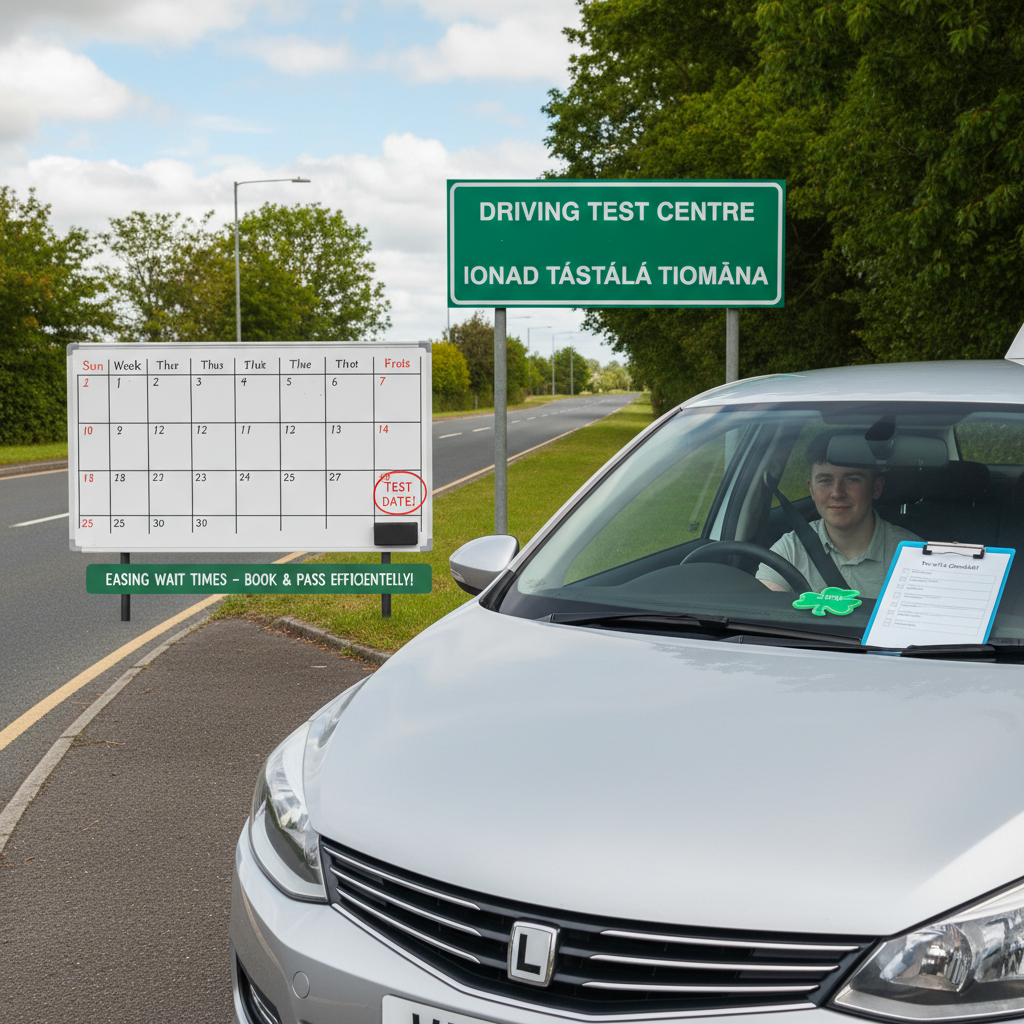
Good news for learner drivers: national driving test waiting times in Ireland have reduced to roughly 16 weeks. After a period of long backlogs many learners faced, the shorter waiting list gives more opportunity to plan, practise and book a test without months of uncertainty. Whether you’re revising bay parking in the rain or getting comfortable on the motorway, this change brings real benefits.
Why waiting times are down
There isn’t one single cause, but a combination of factors has helped bring waits down. The Road Safety Authority (RSA) and test centres have been able to increase the number of tests offered compared with the tightest months of the backlog. Improved scheduling, extra test sessions in some areas, and the gradual return to normal service after pandemic-era disruption all play a part.
Still, it’s important to remember that the 16-week figure is an average. Some urban centres, like Dublin, Cork or Galway, can remain busier than quieter regional centres. Cancellations also free up slots at short notice, which can be a boon if you’re ready to take a test on short notice.
What this means for learner drivers
Shorter waits make the path from learner permit to full licence smoother. If you’ve been practising with an instructor or a parent, you can now align your lesson plan with a realistic test date. For many learners this means less time stuck in limbo and more clarity around arranging insurance, work or college travel plans.
However, shorter waiting times don’t mean you should rush. The test is still the same — examiners will expect safe, legal driving in varied road and weather conditions. Take the extra breathing room to polish manoeuvres, improve hazard perception, and get comfortable driving on local country roads, roundabouts and motorways when appropriate.
Local touches to keep in mind
- Irish weather matters: practice in wet conditions and low light where safe — many tests occur outside ideal weather.
- Country roads vs town driving: some test routes include narrow rural lanes and tight junctions. Be prepared for both.
- Be familiar with local signage and any recent changes to road layouts in your area, especially around new cycle lanes or revised junctions.
Practical tips when booking and preparing
Even with shorter waits, sensible planning pays off. Below are practical steps to take now so you’re ready when your test date arrives.
- Book as soon as you can: If you’ve reached the required standard in lessons, reserve a slot. Waiting lists can change quickly.
- Keep practising consistently: Short, regular lessons beat a last-minute cram. Focus on telling examiners what you intend to do — clear observations and signalling.
- Be flexible with locations: If possible, look for earlier slots in nearby test centres; sometimes travelling a bit further can get you a quicker date.
- Watch for cancellations: Check RSA or test centre portals regularly for last-minute openings — you might pick up an earlier slot.
- Mock tests: Do a full mock test with your instructor under test conditions to build confidence and identify weak spots.
- Sort documentation early: Ensure your learner permit, theory test confirmation (if relevant), ID and any required paperwork are ready well before test day.
- Plan for the weather: Check forecasts and aim to practise driving in rain and windy conditions — typical Irish weather can add pressure during the real test.
Final thoughts
The reduction to about a 16-week wait for driving tests is a welcome development for learner drivers in Ireland. It brings more certainty and the chance to timetable lessons, work and other commitments more effectively. But don’t let the shorter wait tempt you to cut corners — use the extra headroom to arrive fully prepared, calm and confident.
If you need help turning practice into passing performance, our instructors are ready to support you with targeted lessons, mock tests and advice tailored to local test routes. Safe driving and good luck when you book!