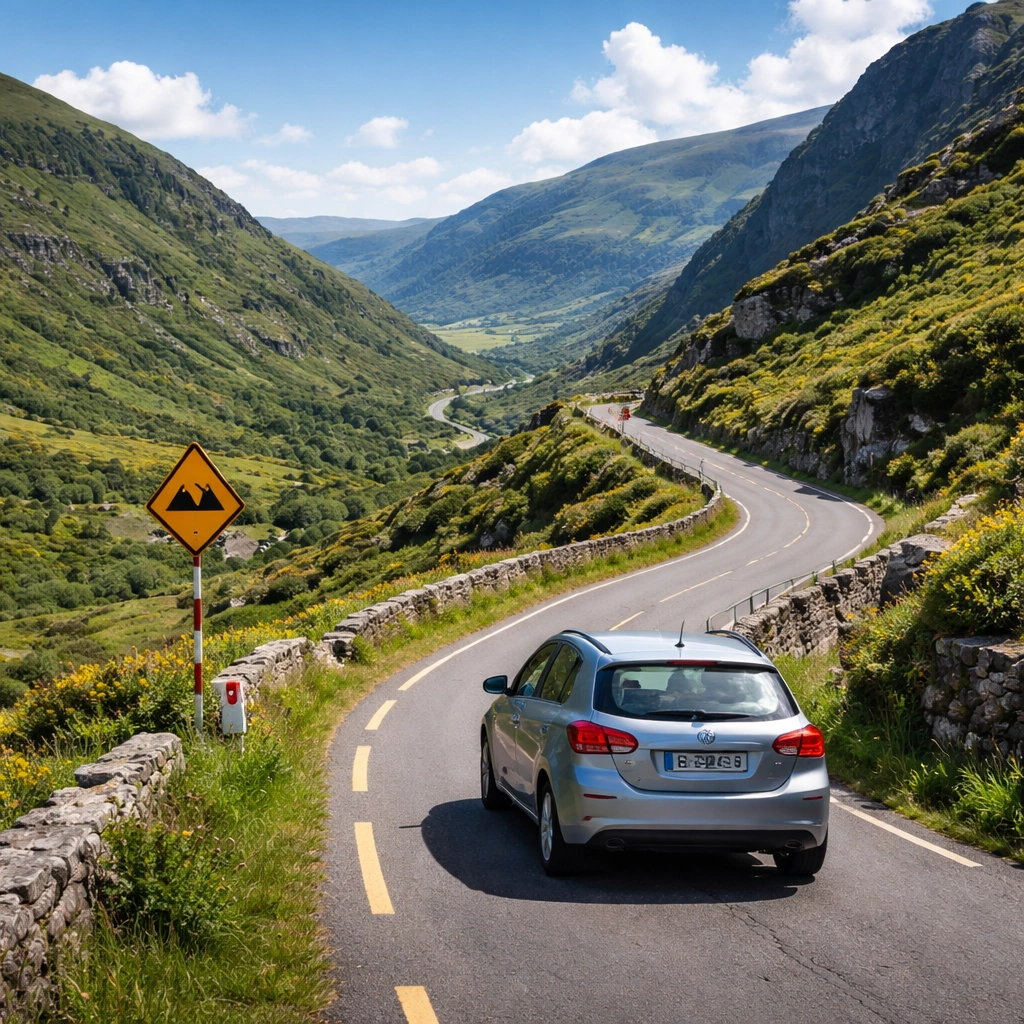
Driving through Ireland’s mountainous regions offers some of the most breathtaking scenery you’ll ever see—but it also demands extra care and preparation. Whether you’re tackling the winding roads of Wicklow, the dramatic passes of Kerry, or the narrow lanes of Donegal, knowing how to handle steep inclines, sharp bends, and changing weather is essential for your safety and confidence.
Who This Guide Is For
This guide is for learner drivers, newly qualified drivers, and experienced motorists who want to build confidence on Ireland’s hillier roads. If you’re planning a trip to areas like the Ring of Kerry, Sally Gap, or Conor Pass, these tips will help you navigate safely and enjoy the journey.
Why Mountain Driving Needs a Different Approach
Unlike flat urban roads, mountainous driving introduces factors like steep gradients, tight corners, and sudden weather changes. Your car’s handling, braking, and visibility can all be affected. Even if you’re a competent driver in town, mountain roads require a shift in mindset—anticipation, patience, and smooth control are key.
Essential Gear and Vehicle Checks
Before heading into the hills, make sure your vehicle is ready:
- Tyre condition: Check tread depth and pressure—mountain roads can be rough.
- Brakes: Ensure they’re responsive; you’ll use them more than usual.
- Engine oil and coolant: Overheating is more likely on long climbs.
- Fuel: Fill up before you go—petrol stations can be scarce in rural areas.
If you’re driving a manual car, be ready to use lower gears to maintain control on descents. In automatics, use the manual mode or ‘L’ (low) setting if available.
Navigating Steep Hills and Sharp Bends
When approaching a steep climb, maintain steady momentum—don’t rush, but avoid stalling by keeping the revs up in a lower gear. On the way down, resist the urge to ride the brakes; instead, use engine braking by staying in a low gear to control your speed.
For sharp bends, slow down before the curve, not during it. Look ahead for signs of oncoming traffic, especially on narrow roads where passing places are limited. If you meet a vehicle coming uphill, they generally have priority—but always use common sense and courtesy.
Dealing with Weather and Visibility
Mountain weather can change in minutes. Fog, mist, or sudden rain can reduce visibility dramatically. Keep your headlights on, even during the day, and reduce speed accordingly. If visibility drops below 100 metres, use fog lights (but switch them off when conditions improve).
In winter, be aware of the risk of ice on higher roads—black ice is particularly dangerous because it’s hard to see. If you’re unsure, delay your trip or choose a safer route.
Common Mistakes to Avoid
- Over-revving on descents: This wastes fuel and can overheat your engine.
- Ignoring warning signs: Sharp bends, steep drops, and animal crossings are common in mountain areas.
- Poor positioning: Stay in the centre of your lane on narrow roads, but be ready to pull in if a larger vehicle approaches.
- Distracted driving: The views are stunning—but keep your eyes on the road.
What to Expect in a Mountain Driving Lesson
At Epic Driving School, our instructors can guide you through real-world mountain driving scenarios. You’ll practise gear selection, braking techniques, and how to read the road ahead. We focus on building your confidence so you can handle steep, winding roads safely—whether for your pre-test prep or just for personal skill development.
Manual vs Automatic: Which is Better for Mountain Roads?
| Feature | Manual | Automatic |
|---|---|---|
| Gear control | Full control over gear selection | Relies on transmission, but many have manual modes |
| Engine braking | Easier to use on descents | Available in some models with hill descent control |
| Learning curve | Steeper, but more versatile | Easier for beginners, less control on steep hills |
| Best for | Drivers who want full control | Those prioritising ease and comfort |
Why Choose Epic Driving School?
At Epic Driving School, we’re proud to be a family-run business with deep roots in Irish communities. Our RSA-approved instructors bring years of experience helping learners master every type of road—including challenging mountain routes. We offer both manual and automatic lessons, tailored to your pace and goals. With a focus on safety, patience, and practical skills, we’ll help you become a confident driver, wherever the road takes you.
Ready to Take on the Hills?
If you’re planning to drive in Ireland’s beautiful but demanding mountain areas, proper training makes all the difference. Book a lesson with Epic Driving School today and gain the skills to handle steep roads with confidence. Whether you’re a complete beginner or need a refresher, we’re here to help you every step of the way.
FAQ
1. Do I need special training to drive in mountainous areas?
While not legally required, mountain driving training is highly recommended for safety and confidence. It teaches you how to manage steep gradients, sharp bends, and changing conditions.
2. Is it harder to drive a manual car on mountain roads?
It can be more challenging at first, but manual cars give you better control over speed and power on hills. With practice, most drivers find it manageable—and even preferable.
3. What should I do if my car starts to overheat on a long climb?
Turn off the air conditioning, reduce speed, and if safe, pull over to let the engine cool. Check coolant levels before your trip to reduce the risk.
4. Are there specific rules for giving way on narrow mountain roads?
Yes—generally, vehicles going uphill have priority. However, always use common sense and be prepared to reverse to a passing place if needed.
5. Can I practise mountain driving before my test?
Absolutely. Many learners include mountain road practice in their pre-test lessons to build confidence and experience.
6. What’s the best time of year for mountain driving in Ireland?
Late spring to early autumn usually offers the most stable weather, but always check forecasts before heading out.
7. Do I need to worry about animals on mountain roads?
Yes—sheep, goats, and even deer are common in rural areas. Drive slowly and be ready to stop if you see animals near the road.
8. How can I improve my hill-start technique?
Practice using the handbrake to prevent rolling back, and get comfortable with clutch control. Your instructor can help you master this skill quickly.