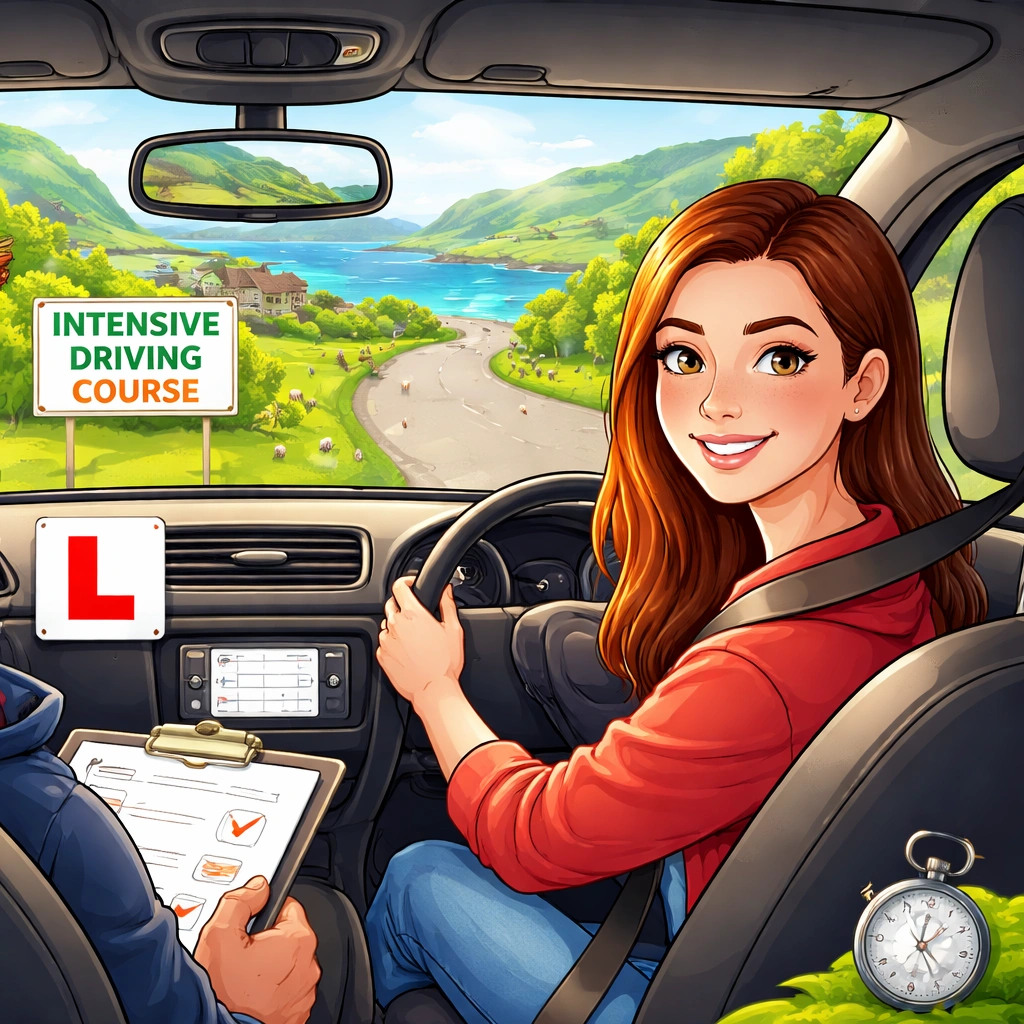
Driving in Ireland can feel like a rite of passage. You’ve got the bus pass, the bike, maybe even a lift from Mammy when it’s raining sideways. But the day you finally get your full licence? That’s when you truly hit the road. If you’re thinking of learning fast with an intensive driving course, you’re not alone. More Irish learners are asking: is it worth it?
Let’s break it down so you can decide if this route is right for you.
Who This Is For
Intensive driving courses are best suited to:
- Learners who need to pass quickly for work, study, or personal reasons
- Those who can take time off or have a flexible schedule
- Drivers with some previous experience who want a quick refresher
- People who learn best under pressure and can retain information fast
Pros of an Intensive Driving Course
Fast Progress
You can go from zero to test-ready in a matter of weeks. If you’re taking time off or can dedicate your days to learning, you’ll build skills quickly without long gaps between lessons.
Everything Fresh in Your Mind
With back-to-back lessons, manoeuvres, rules, and observations stay fresh. There’s no ‘forgetting how to do a hill start’ because you did one yesterday.
Less Overall Cost (Sometimes)
While the upfront cost is higher, you may need fewer total lessons than spreading them out over months. Some schools offer intensive packages at a reduced rate.
Perfect for Test Deadlines
If you’ve booked your test and need to get test-ready fast, an intensive course can get you there without dragging it out.
Cons of an Intensive Driving Course
Information Overload
Driving involves a lot of new skills, rules, and multitasking. Cramming it all in can feel overwhelming, especially if you’re nervous or a slower processor.
Less Time to Reflect
Spreading lessons out gives you time to reflect, practise with a sponsor, and absorb feedback. Intensive courses move fast, so mistakes might not get the same attention.
Risk of Burnout
Hours behind the wheel in a short time can be mentally and physically tiring. By day three, you might feel drained rather than confident.
Not Ideal for Absolute Beginners
If you’ve never driven before, jumping straight into an intensive course might be too much. A few starter lessons spread out can help you build a foundation first.
Manual vs Automatic: What’s Best for an Intensive Course?
Choosing between manual and automatic can affect your course length and cost. Here’s a quick comparison:
| Manual Intensive Course | Automatic Intensive Course | |
|---|---|---|
| Course Length | Usually 10-15 days | Usually 7-10 days |
| Learning Curve | Steeper (clutch, gears, coordination) | Easier (focus on road, no gears) |
| Post-Test Freedom | Drive any car | Limited to automatics |
| Best For | Those wanting full licence flexibility | Those wanting simplest, fastest path |
What to Expect in an Intensive Course
Most intensive courses follow a similar structure:
- Day 1-2: Car controls, basic moves, clutch control (if manual)
- Day 3-5: Town driving, junctions, roundabouts
- Day 6-8: Rural roads, speed management, meeting traffic
- Day 9-12: Mock tests, manoeuvres (reverse around corner, turnabout)
- Final days: Pre-test prep and test day (if included)
Expect long days, lots of practice, and feedback after every session. Bring a notebook, water, and comfy shoes.
Common Mistakes to Avoid
- Skipping the learner permit: You must have your NDLS permit before starting.
- Choosing the wrong course length: Too short and you’ll feel rushed; too long and you might lose momentum.
- Ignoring sponsor practice: If you have a sponsor (parent/friend), use evenings to practise what you learned.
- Skipping the EDT: In Ireland, you must complete Essential Driver Training lessons if you got your first permit after 4 April 2011.
- Neglecting rest: Don’t book 8-hour days back-to-back without breaks. Mental fatigue slows learning.
Pre-Test Lessons: What’s the Difference?
Pre-test lessons focus on the exact routes, test manoeuvres, and common mistakes that trip learners up. If you’re close to test-ready, these are worth it. But if you’re starting from scratch, you’ll need general lessons first.
Pre-test lessons usually include:
- Mock tests with an instructor playing the role of tester
- Practice on test centre routes
- Focus on observation, mirrors, and positioning
- Tips on test-day nerves and what the tester looks for
Is It Worth It? The Verdict
If you’re motivated, have time, and learn quickly, an intensive driving course can be a brilliant way to get test-ready fast. But if you prefer to take things slowly, hate pressure, or are brand new to driving, a traditional course might suit you better.
Think about your learning style, your timeline, and your budget before committing. And remember: passing the test is only the first step. Real confidence comes with practice after you get your full licence.
Why Choose Epic Driving School
At Epic Driving School, we offer both intensive and traditional driving courses across Dublin and surrounding areas. Our ADI-approved instructors tailor each course to your pace and needs. Whether you’re learning manual or automatic, we’ll get you ready for your test without the stress. We also provide pre-test lessons and EDT support to make sure you’re fully prepared.
Ready to Get Started?
Book your first lesson today and let’s get you on the road to passing with confidence. Whether you want to blitz it in a week or take your time, we’ve got a course that fits.
FAQ
1. How long is an intensive driving course in Ireland?
Most intensive courses run between 7 and 15 days, depending on your experience and whether you’re learning manual or automatic.
2. Do I need to complete EDT before an intensive course?
If you got your first learner permit after 4 April 2011, yes. You must complete 12 EDT lessons with a registered ADI before taking your test.
3. Can I take my test at the end of an intensive course?
Some courses include a test at the end, but you must have completed EDT and hold a valid learner permit. Your instructor can advise if you’re ready.
4. Is automatic easier for an intensive course?
Yes, because there’s no clutch or gear changes. You can focus on road skills, which can make the course shorter and less stressful.
5. What if I fail the test after an intensive course?
You can take a few follow-up lessons to work on weak areas, then reapply for another test. Many learners pass on their second attempt.
6. How much does an intensive course cost?
Prices vary, but expect to pay between €600 and €1,200 depending on course length and car type. Some schools offer package discounts.
7. Can I use my own car for an intensive course?
Most schools provide the car, but if you prefer to use your own, check with your instructor first. Dual controls are required for safety.
8. What’s the pass rate for intensive courses?
Pass rates depend on the learner’s ability and readiness. Intensive courses can be highly effective if you’re well-prepared and get quality instruction.