Night Driving in Ireland: A Guide for New Drivers
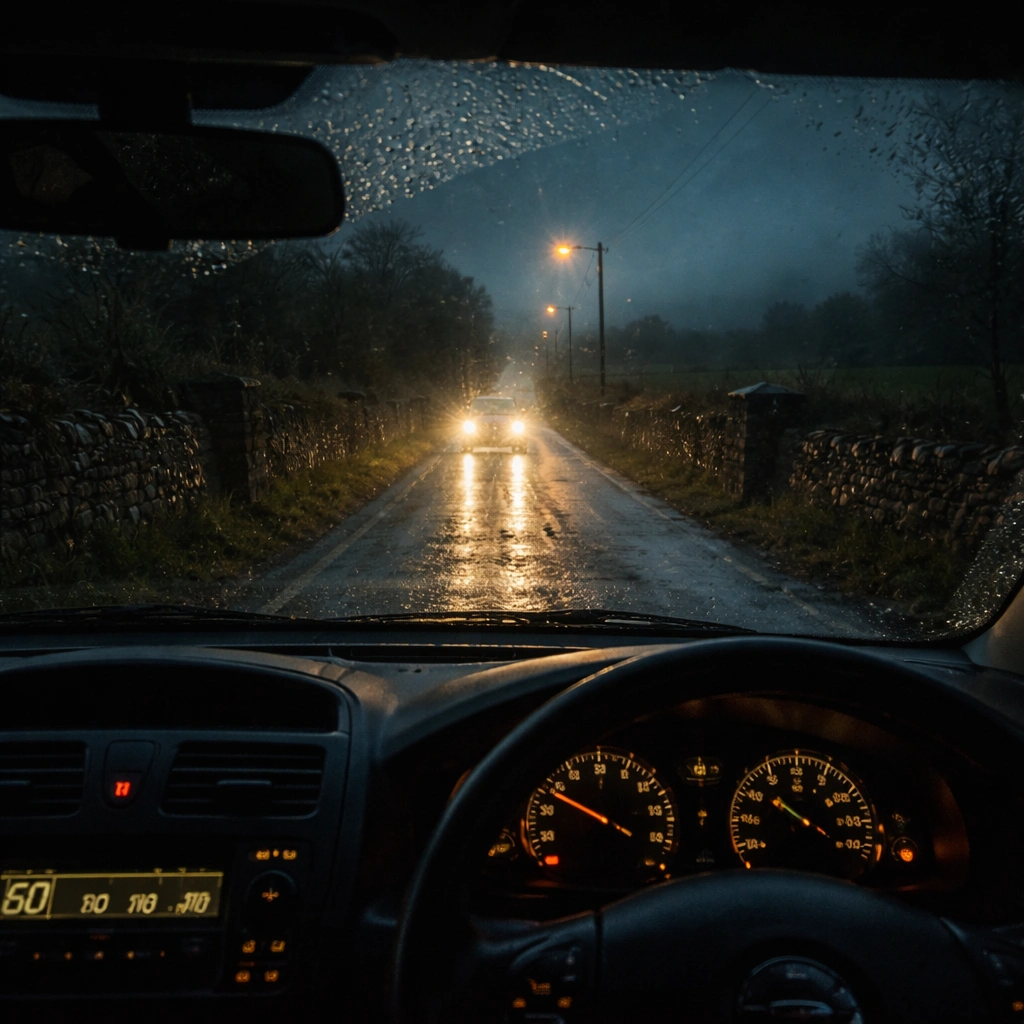
The roads feel quieter, the streetlights create a hypnotic rhythm, and that familiar route suddenly looks different. For many learner drivers, the first few solo drives after sunset are a mixed bag of nerves and excitement. It’s a completely normal part of becoming a confident driver. While the core rules of the road don’t change, your perception and reaction times are tested differently in the dark.
This guide is designed to ease you into night driving, breaking down the practical skills you need and the common pitfalls to avoid. We’ll cover everything from setting up your car to handling tricky situations like unlit rural roads or the dreaded headlight glare.
Who This Is For
This guide is for learner drivers in Ireland who are preparing for their first few experiences driving after dark. Whether you’ve just started your Essential Driver Training (EDT) or you’re gearing up for your driving test, these tips will help you build confidence and stay safe on the road.
Getting Started: Before You Even Turn the Key
Preparation is half the battle when it comes to night driving. Before you even think about heading out, a quick check of your car and your mindset can make a huge difference.
1. Check Your Lights and Windows
- Headlights: Make sure both main beam and dipped beam are working. It’s a good habit to check them weekly.
- Indicators and Brake Lights: Ask a friend or family member to stand behind the car while you press the brake and signal, or check the reflection in a window or garage door.
- Wipers and Washers: Clean windscreens are critical at night. Any streak or smear from your wipers can catch the light and obscure your vision. Top up your washer fluid.
- Windows and Mirrors: Clean the inside of your windscreen and windows. Grime and condensation can create a haze that’s hard to see through.
2. Choose Your Route and Time Wisely
For your first few drives, stick to familiar routes. This helps you anticipate junctions and turns without the added stress of navigation. Starting around dusk, before it’s completely pitch black, can also be a gentler introduction than heading out at 10 pm.
What to Expect in a Night Driving Lesson
If you’ve booked an extra lesson specifically for night driving, you’ll likely start with a review of the basics in a quiet area. Your instructor will guide you through:
- Lighting Controls: Practising how to switch between dipped beam and main beam smoothly and at the right moments.
- Managing Glare: Learning where to focus when faced with oncoming headlights (hint: look to the left side of your lane, not directly at the lights).
- Reading the Road: Using the reflective cats’ eyes and road markings to position your car correctly when visibility is limited.
- Speed and Braking: Understanding that stopping distances are effectively doubled in wet or icy conditions, which are more common at night.
It’s less about complex manoeuvres and more about building a calm, observant rhythm. If you feel overwhelmed, it’s always okay to pull over in a safe, well-lit spot (like a petrol station) to take a breath.
Manual vs. Automatic for Night Driving
While the fundamentals of night driving are the same for both, some learners find one slightly easier than the other depending on their confidence levels. Here’s a quick comparison:
| Feature | Manual Lessons | Automatic Lessons |
| :— | :— | :— |
| **Cognitive Load** | Higher, as you must manage gears, clutch, and speed simultaneously. | Lower, allowing more focus on observation, speed, and road positioning. |
| **Stalling Risk** | Present, especially if you’re nervous or on an incline. | Eliminated, reducing one common source of stress in unfamiliar conditions. |
| **Learning Curve** | You learn full car control from the start. | Easier to get comfortable quickly, which can be a confidence boost for night driving. |
| **Recommendation** | Ideal if you want to be qualified to drive any car. | Great for learners who feel overwhelmed by multi-tasking, especially in low-light. |
Ultimately, the best choice depends on your personal comfort. Many learners in Ireland opt for manual to have full driving rights, but taking a few lessons in an automatic can sometimes help build foundational confidence first.
Common Mistakes Learners Make at Night (And How to Avoid Them)
- Staring at Oncoming Headlights: This causes temporary blindness (glare recovery). Your eyes need time to adjust. Instead, flick your eyes to the left kerb or the white line on your side of the road to maintain your position.
- Over-Driving Your Headlights: This means driving faster than your headlights can illuminate. A good rule of thumb is that you should be able to stop in the distance you can see to be clear.
- Forgetting to Dip to Main Beam: On rural roads, main beam is essential. But remember to dip to main beam when you see the silhouette of another car (or the full beam of theirs) to avoid dazzling them. It’s also a legal requirement.
- Incorrect Demisting: At night, the temperature drop often leads to condensation on the inside of the windscreen. Use your air-con (even if it’s cold outside) or open a window slightly to clear it quickly.
- Missing Road Signs: Some signs are harder to read in the dark. Slow down early when approaching junctions or speed limit changes to give yourself more time to read and react.
Building Your Confidence: A Step-by-Step Plan
- Start with a Passenger: As a learner, you can’t drive solo at night (or at all) outside of your lesson times. But you can ride along with a qualified driver. Observe how they use their lights, handle glare, and adjust their speed.
- Book a Dedicated Night Lesson: Many driving schools, including ours, offer tailored lessons. It’s the safest way to get hands-on experience with an expert beside you.
- Practice in a Large, Empty Car Park: If you have access to one, this is a great spot to get a feel for your car’s dimensions in the dark, practice your light switching, and get comfortable with the dashboard lights without the pressure of traffic.
- Focus on One Thing at a Time: Don’t try to master everything in one go. Your first lesson might focus purely on smooth driving and observation. The next could be about navigating roundabouts in the dark.
Why Choose Epic Driving School?
Learning to drive at night is a milestone, and having the right support makes all the difference. At Epic Driving School, our instructors are fully qualified and registered with the Road Safety Authority (RSA). We provide patient, calm, and structured lessons tailored to your individual needs. Whether you need help with your EDT, pre-test preparation, or specific skills like night driving, we’re here to guide you every step of the way.
FAQ: Night Driving in Ireland
Do I need to practice night driving for my EDT?
While your Essential Driver Training (EDT) logbook doesn’t mandate a specific number of night hours, the RSA recommends that you gain experience in all conditions, including at night and in bad weather. Many learners book extra lessons to cover this.
Can I drive at night on a learner permit?
Yes, as long as you are accompanied by a qualified driver (who has held a full license for at least 2 years) and displaying L-plates. You cannot drive alone at any time on a learner permit.
What are the legal lighting requirements at night?
You must switch on your dipped headlights between sunset and sunrise. Full beam headlights must be dipped immediately when you see an oncoming vehicle or when following another vehicle at a close distance. Fog lights should only be used in poor visibility.
How do I handle bright streetlights or glare?
Reduce your speed slightly to give yourself more reaction time. Keep your windscreen and windows clean inside and out. Avoid looking directly at bright lights and focus on keeping your car positioned correctly in your lane.
Should I book extra pre-test lessons specifically for night driving?
If your driving test is scheduled for a time when it might be dark, it’s highly recommended. Tests can run into the evening, especially in winter. Practice in similar conditions to what you’ll face on the day. Check the driving test section of our site for more info.
What’s the biggest difference between day and night driving?
Reduced visibility. It’s harder to see pedestrians, cyclists, and road hazards. Your reaction time needs to be sharper because you have less time to process what’s happening ahead.
Is it harder to learn in an automatic or manual at night?
Both have their pros and cons. Some find an automatic less stressful as they can focus purely on observation and road positioning. Others prefer a manual as it allows them to practice full control. It depends on your personal learning style.
What if I feel too anxious to drive at night?
That’s completely normal. Start small—perhaps just sitting in the car with the engine off, then turning the lights on, then driving around a quiet cul-de-sac. A professional lesson can help you build confidence in a controlled environment.
Ready to Take on the Night?
Night driving is a skill that builds with practice and patience. Don’t rush it. Focus on the fundamentals, stay calm, and remember that every driver has been exactly where you are now.
If you’re looking to build your confidence behind the wheel, our team at Epic Driving School is here to help. Get in touch today to discuss your lesson options and start your journey towards a full Irish driving license.