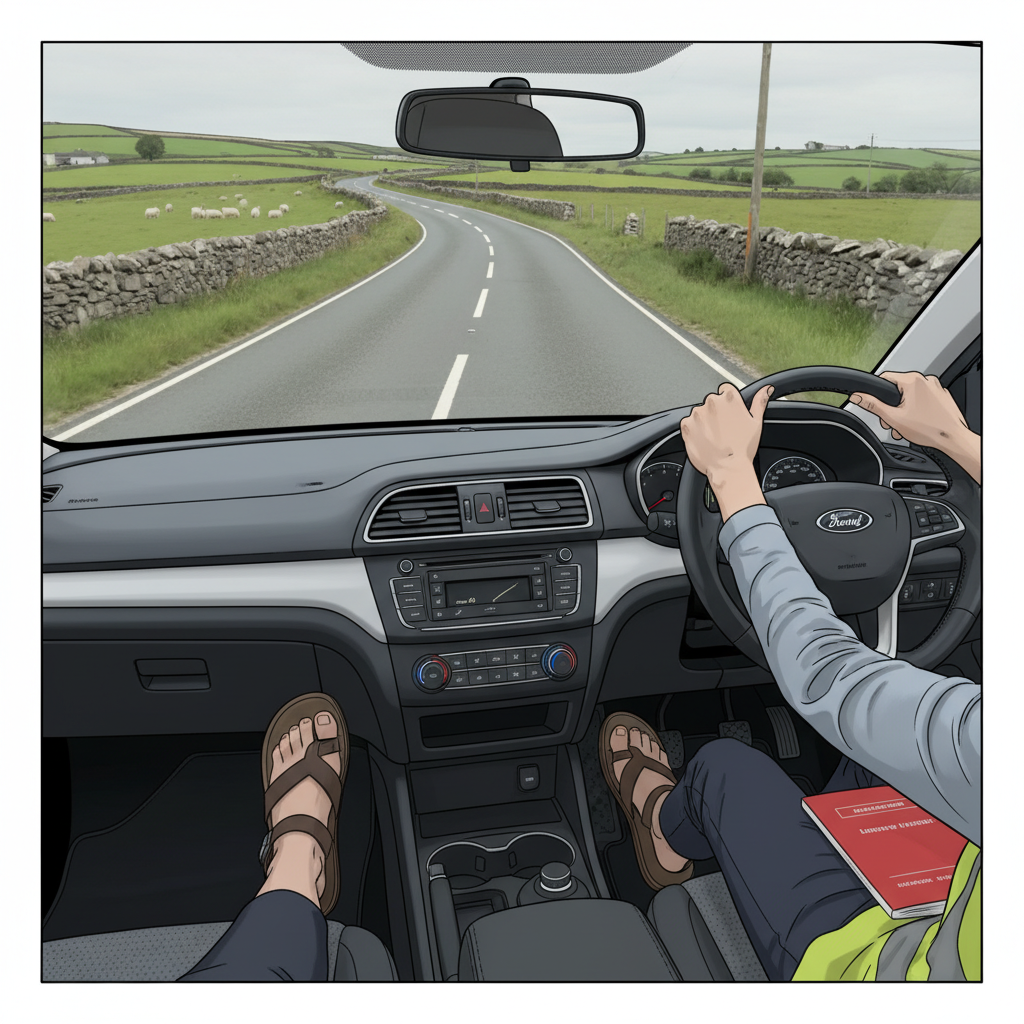
Hearing that someone was refused their driving test because they were wearing sandals has sparked a lot of conversation — and rightly so. With politicians asking the Road Safety Authority (RSA) for clarification more often, many learner drivers are wondering what’s allowed on the day of the test and what could cause an examiner to refuse to proceed.
What’s behind the recent queries to the RSA?
In recent weeks there’s been a noticeable rise in public and political questions to the RSA about how strict examiners can be when applying safety rules. Incidents reported in the media — including a case where a learner was reportedly not permitted to take a test while wearing sandals — have pushed the issue into the spotlight. Politicians are asking the RSA to confirm guidance so that learners and instructors know what to expect.
The key point is that the RSA’s primary responsibility is road safety. Examiners are entrusted to make sure the candidate can operate the vehicle safely and has suitable footwear, clothing and a vehicle in a roadworthy condition.
RSA guidance on footwear and examiner discretion
There isn’t a named list of banned shoes published as law, but the practical guidance is clear: footwear must allow the driver to safely operate pedals and control the vehicle. Examiners have discretion to postpone or refuse a test if they consider that safety could be compromised. That can include footwear that’s loose, slippery or otherwise prevents proper pedal control — flip-flops and some thin-soled sandals fall into this category.
Remember: examiners are focused on safety. Rain-slick Irish roads, busy urban junctions in Dublin, or narrow country lanes all demand confident control of the pedals. If an examiner believes that a candidate’s shoes would prevent a rapid, controlled response in an emergency, they can decide not to continue the test.
What this means in practice
- There’s no fixed “ban” list, but unsuitable footwear can lead to refusal.
- Examiners use their judgement with safety as the priority.
- If turned away, you’ll generally need to rebook and return with appropriate footwear.
Practical checklist for learner drivers in Ireland
To avoid unnecessary stress on test day, treat footwear and other pre-test items as part of your preparation. Below is a short, practical checklist tailored for Irish learners:
- Wear sensible shoes: flat, secure, non-slip footwear (trainers or low-heeled shoes are ideal). Avoid flip-flops, flimsy sandals, or very thick-soled boots.
- Bring your learner permit: it’s essential. Without it you cannot take the test.
- Check the vehicle: if you’re using your own car, ensure it’s taxed, insured, and in good working order (lights, indicators, tyre tread, etc.).
- Dress for the weather: Ireland’s weather can change quickly. Bring a jacket and choose shoes that won’t be affected by rain.
- Arrive early: gives you time to calm nerves and swap footwear if needed.
- Take a pre-test lesson: a final lesson with your instructor can identify any small issues before the examiner arrives.
If you’re turned away — what to do next
It’s frustrating, but if an examiner refuses to proceed because of safety concerns, stay calm and polite. Ask for the reason and any guidance about what to change. You’ll normally need to rebook the test, but use the extra time to address the issue so you don’t face the same problem again.
If you feel the decision was unfair, there are channels to query it with the RSA, and politically there’s increasing scrutiny on how guidance is applied — so record the facts and follow the formal complaint or clarification process if necessary.
Conclusion
The sharp increase in questions to the RSA shows how much learners care about getting clear rules. At the end of the day, the RSA and examiners prioritise safety. A little preparation — especially choosing suitable footwear and ensuring your car and paperwork are in order — will reduce the risk of being turned away and let you focus on the drive itself.
If you’d like a quick pre-test checklist or a final mock test, our instructors at Epic Driving School are here to help. We’ll make sure you turn up confident, legal, and ready to pass.