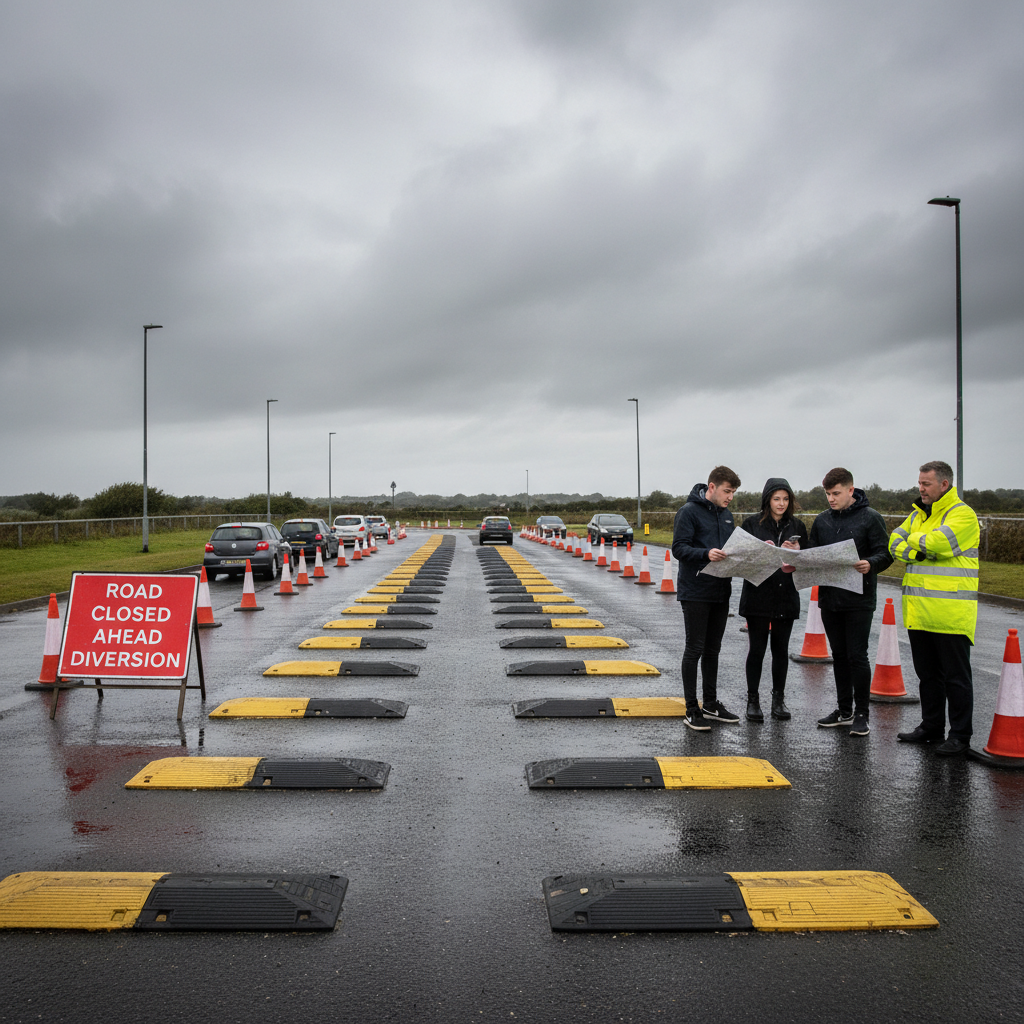
There’s been a recent and unexpected disruption for learner drivers in Dublin: the Road Safety Authority (RSA) has closed a city driving test centre because of the number of speed ramps near the site. The decision highlights how local road features can affect test logistics and, more importantly, test safety.
Why did the RSA close the test centre?
The RSA takes practical driving exam safety very seriously. Examiners need reliable, consistent test routes where candidates can demonstrate required skills without unusual hazards that could unfairly affect results or put people at risk. In this case, a cluster of speed ramps close to the centre made some parts of the test route unsuitable for conducting standard, safe examinations.
Speed ramps are intended to slow traffic and protect pedestrians, but when they are unusually frequent or irregularly placed they can interrupt the flow of a test route, affect vehicle control and create inconsistent assessment conditions for candidates.
What this means for learner drivers
If you had a test booked at the affected Dublin centre you might see your appointment cancelled or moved to another site. That can be inconvenient, but the closure is generally temporary while the RSA reviews routes or consults with local authorities.
Practical impacts include longer travel to a relocated test centre, possible delays in getting a new date, and the need to practise on a wider variety of roads. It’s worth checking your email and MyRSA account regularly for updates and keeping mobile contact details current so you don’t miss relocation messages.
Local context and practicalities
In Ireland, local road design varies from quiet housing estates to busy urban streets and suburban routes with traffic calming. Weather can make ramps more of a challenge — wet or icy conditions change stopping distances — so expect examiners to be cautious. Remember that the RSA and local councils aim to balance road safety for all road users; sometimes that balance means altering testing arrangements.
How to prepare while centres are affected
Whether your test is moved or delayed, use the time to sharpen the skills that matter most to examiners. Below are practical tips tailored for learner drivers in Ireland, especially those practising on roads with speed ramps or traffic calming measures.
- Practice approaching speed ramps: Learn to judge a safe speed and where to brake smoothly. Avoid harsh braking or accelerating immediately after the ramp.
- Maintain vehicle control: Focus on steering accuracy and gear choice; go into ramps in the right gear so you don’t need to change mid-ramp.
- Observation and anticipation: Look well ahead for ramps, pedestrians or cyclists. Signal and position the car correctly when changing lanes around traffic calming.
- Be comfortable on different surfaces: Practice in wet conditions if safe to do so; damping down speed on ramps in poor weather is sensible.
- Check practical details: Keep your learner permit, theory test cert (if required), insurance and vehicle documents up to date. Confirm the test vehicle is taxed and NCT where applicable.
- Stay flexible: Be prepared to travel to a different test centre and arrive early on the day to avoid added stress.
- Communicate with your instructor: Ask your ADI (Approved Driving Instructor) to include practice on roads with several ramps so you gain confidence in real-life scenarios.
Looking ahead
The RSA’s move is a reminder that local road features and safety decisions influence more than just day-to-day driving — they can change how tests are delivered. If you’re due a test, keep an eye on RSA communications and stay in touch with your instructor. If you’re still preparing, use this time to build confidence on a range of road types and conditions.
Most closures like this are temporary. The RSA works with local councils to find suitable test routes and to ensure exam conditions are fair for everyone. In the meantime, a bit of extra practice and preparation can turn an inconvenience into an advantage on test day.
Source – news.google.com