
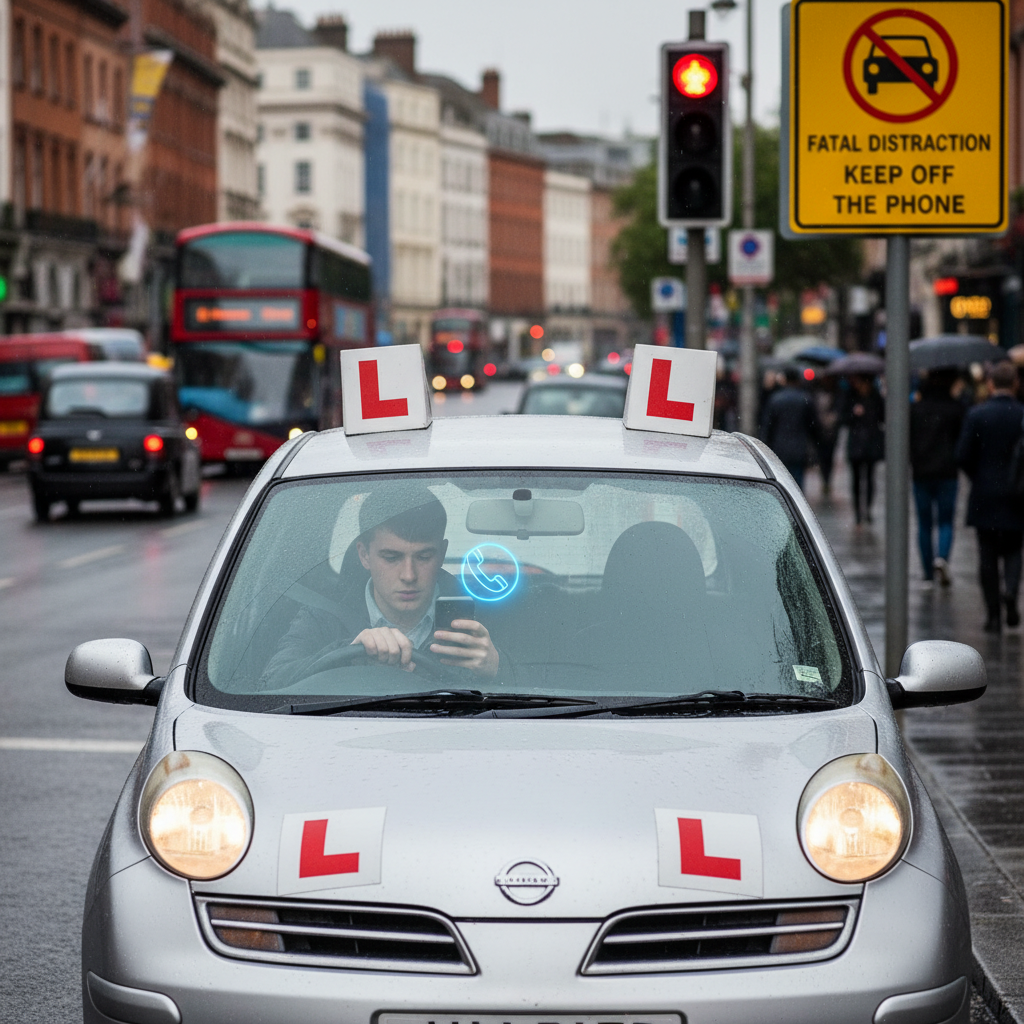
New figures about the number of Irish drivers observed using mobile phones have been met with scepticism from the Road Safety Authority (RSA). While the headline numbers have made people sit up and take notice, the RSA says it’s important to look closely at how the data were collected and what it really tells us about behaviour behind the wheel.
Why the RSA is questioning the data
At first glance, any statistic indicating widespread phone use while driving is worrying — and rightly so. But the RSA has pointed out potential problems with the study methodology and interpretation. Observational studies can be influenced by where and when researchers watch drivers, the visibility of devices through windows, and whether a quick glance at a screen is recorded the same way as prolonged handheld phone use.
In short, a figure alone doesn’t always capture the full picture. The RSA is asking for robust, repeatable methods so policymakers and the public can be confident about trends and the scale of the problem. That doesn’t mean the issue is small — even if the exact numbers are debated, using a phone while driving remains a serious safety risk.
What this means for learner drivers in Ireland
Whether the numbers are slightly higher or lower than first reported, the message for learner drivers is clear: avoid any temptation to handle a mobile phone while driving. For those preparing for lessons, practice or a driving test, the habits you form now are likely to stay with you for life. The RSA and An Garda Síochána remain focused on enforcement and education — and as a learner you want to be on the right side of both.
Remember the context of Irish roads: heavy urban traffic in Dublin and Cork, the M50’s busy stretches, narrow country lanes with sudden bends, and changeable weather that can reduce visibility. Any distraction — including a two‑second check of a message — increases crash risk considerably.
Legal and safety reminders
- Using a handheld device while driving is against the law in Ireland. Penalties and enforcement can include fines and penalty points.
- Even hands‑free use can be distracting; the safest option is to set your phone to silent or Do Not Disturb before you drive.
- As a learner, your instructor or supervising driver will expect you to demonstrate safe, attentive driving — that includes not handling a phone.
Practical tips for learner drivers
Good habits start early. Here are some straightforward, practical steps you can use every time you get behind the wheel:
- Put your phone away: Place it in the glovebox, boot or in a zipped pocket before you start the engine.
- Use Do Not Disturb: Activate a driving mode on your phone that blocks notifications when moving.
- Plan ahead: Program your route into a mounted holder before you set off — if you must use navigation, use voice guidance and a secure mount.
- Practice with your instructor: Let them handle calls or messages during lessons so you can focus fully on driving tasks.
- Know the law: Familiarise yourself with the rules about devices, fines and penalty points so there are no surprises.
- Be a role model: If you’re supervising a learner, set a good example by never using your phone while driving.
How to respond to headline figures
When a new study hits the headlines, it’s useful to keep a few things in mind. Check who carried out the research and how the observations were made. Look for responses from official bodies like the RSA or An Garda Síochána. And most importantly, translate concern into action: use the information to reinforce safe driving habits rather than getting lost in debates over exact percentages.
For learner drivers, the takeaway is simple: whether data points shift slightly or stay the same, distracted driving is dangerous. Forming careful, distraction‑free driving routines now will protect you and other road users long after you pass your test.
Conclusion
The RSA’s challenge to the data underlines the need for careful evidence collection — but it doesn’t change the basic truth. Handling a phone while driving increases the risk of collisions. For learner drivers in Ireland, the best response is practical: remove distractions, learn safe routines with your instructor, and make attentive driving second nature. That way you’ll be ready for whatever the roads throw at you, from slick autumn mornings to busy commuter routes.
Source – https://news.google.com/rss/articles/CBMixAFBVV95cUxQd05xZ0dZODNiRC1YVXpGRVk4aFQ5NGFFaVJtUmFVUWUtR0VhQ2hqTEQtUnprNFNvVXUwVEEyb1NiSkhuQlhfc3d5VS13UV9LNjdZcm9WWTA4anlxSEw0TThJbFc2MG1TZDBtdDZVUksydVByTk5pbV9zOE95MjdCWHVBRWtVTVg2M2ZHY0lJb29Bam5WcWpVSXJNbkM1RGQ3OEZDVUUyUml3LUhNMzN1aUswVlZKa1g3VVg4SU9pS0l6QjVu?oc=5