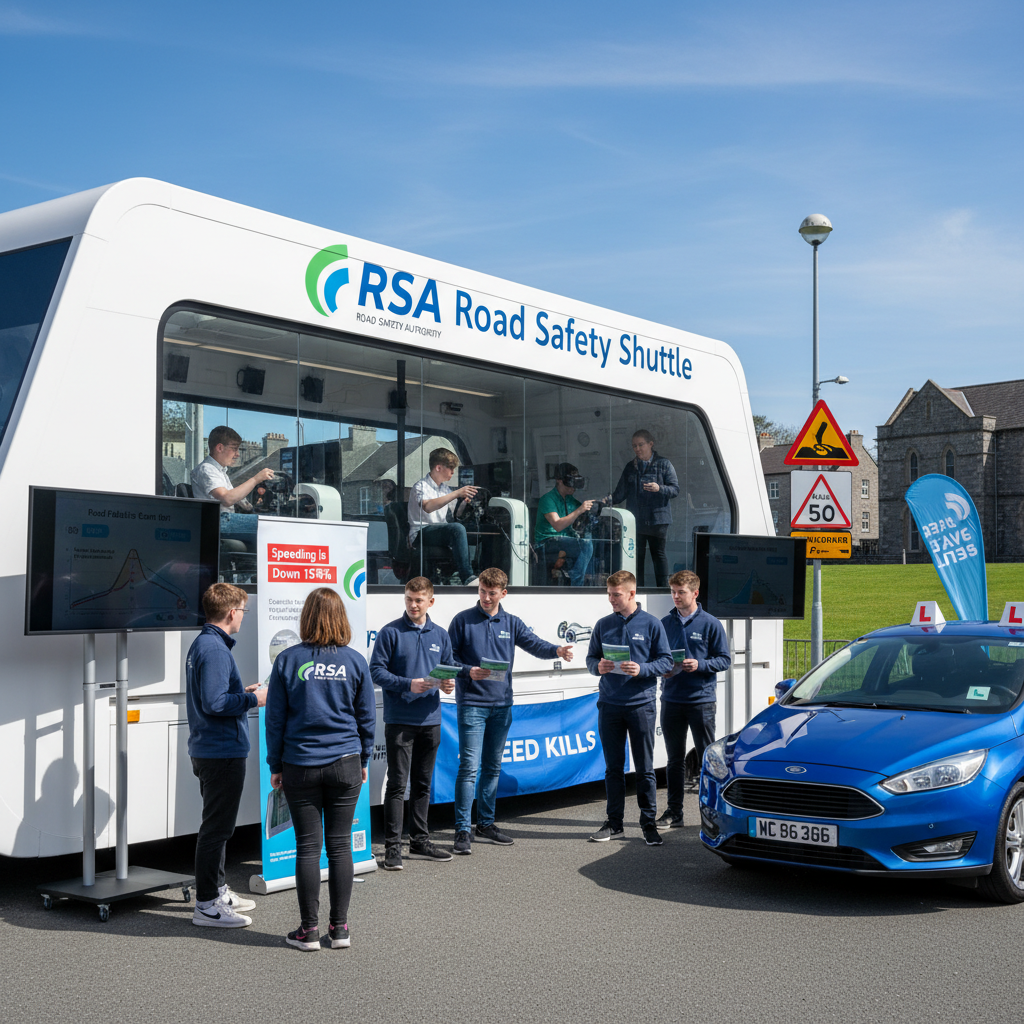
Last week the RSA Road Safety Shuttle rolled into Waterford, offering local students and road users an up-close look at modern road safety issues. The mobile unit delivers interactive exhibits, demonstrations and conversations about the everyday choices that make journeys safer. If you’re a learner driver or supervising someone with L‑plates, this visit is a timely reminder of what really matters on Irish roads.
What the Shuttle brings to communities
The RSA shuttle is designed to be hands-on. Visitors can explore displays that explain how speed, distraction, alcohol and fatigue affect stopping distances and crash outcomes. There’s usually a focus on the things young drivers can control — wearing seatbelts, putting phones away, and planning journeys around weather and road conditions. Staff and volunteers explain safety messages in plain language and show real-life consequences in a way that sticks with people.
Why these visits matter in Waterford
Waterford’s mix of urban streets and rural roads means drivers regularly face changing surfaces, narrow bends and varying speed limits. Local weather — rain, mist and occasional strong winds — can reduce grip and visibility. The shuttle visit helps translate national RSA guidance into local context, highlighting how the same risk looks different on the N25, in a housing estate, or on narrow country lanes.
Key road safety messages for learner drivers
During the visit the RSA team reinforced a handful of core lessons that every learner should absorb:
- Speed matters: Higher speed reduces reaction time and increases stopping distance. Adjust your speed to the conditions, not just the limit.
- Put the phone away: Even a few seconds of distraction can end a trip. Use do-not-disturb settings or put the phone in the glovebox.
- Seatbelts save lives: Buckle up front and back, every trip, every time.
- Alcohol and drugs don’t mix with driving: Young drivers are particularly vulnerable to the effects of impairment.
- Plan for weather and visibility: Rain, spray and glare change how you drive — reduce speed and increase following distance.
Interactive learning beats lectures
One thing visitors often comment on is how tangible the demonstrations are. Seeing a simple simulation of stopping distances or experiencing a mock distraction scenario tends to change behaviour more effectively than a leaflet. For learner drivers, practical exposure reinforces safe habits that will be needed when you take your driving test and step out alone on the road.
Practical tips for learner drivers in Ireland
To follow up on the shuttle’s messages, here are simple, practical steps you can start using today:
- Always use L or R plates as required and ensure your supervising driver meets the legal requirements before you set off.
- Build hours in different conditions: practise in heavy rain, at night and on rural roads with a patient instructor or experienced supervisor.
- Before any drive, do a basic safety check — tyres, lights, mirrors, seat position and seatbelts.
- Keep distractions to an absolute minimum: silence your phone, set navigation before you move, and avoid loud music while learning.
- Learn to judge safe following distances — use the two-second rule in dry conditions and increase it in rain or poor visibility.
- Take breaks on longer journeys. Fatigue creeps up and affects reaction times even on familiar routes.
- Use official RSA resources for theory and hazard perception practice so you enter the test confident and prepared.
How to get the most from local road-safety events
If the RSA or your local council runs a road-safety event, make a plan to attend. Bring your supervising driver or friends who are also learning — discussions after a demonstration help lock in the lessons. Ask questions about local trouble spots and what practical steps other locals take to stay safe.
Follow-up at home
After you visit or hear a safety talk, try to put one change into practice immediately. It could be setting a phone‑free rule in the car, increasing following distance, or scheduling more practice on wet roads. Small, consistent changes are what make driving safer over time.
Conclusion
The RSA Road Safety Shuttle’s visit to Waterford is more than a one‑day event — it’s a prompt to think about safer habits every time you get behind the wheel. For learner drivers, the lessons are practical and immediate: slow down, avoid distractions, wear your seatbelt, and practise in a variety of conditions. Waterford’s roads have their own challenges, but with the right mindset and steady practice, new drivers can build the skills and confidence to travel safely.
For updates about future RSA visits or local road-safety events in Waterford, keep an eye on the RSA website and community notices from Waterford City & County Council.