Introduction
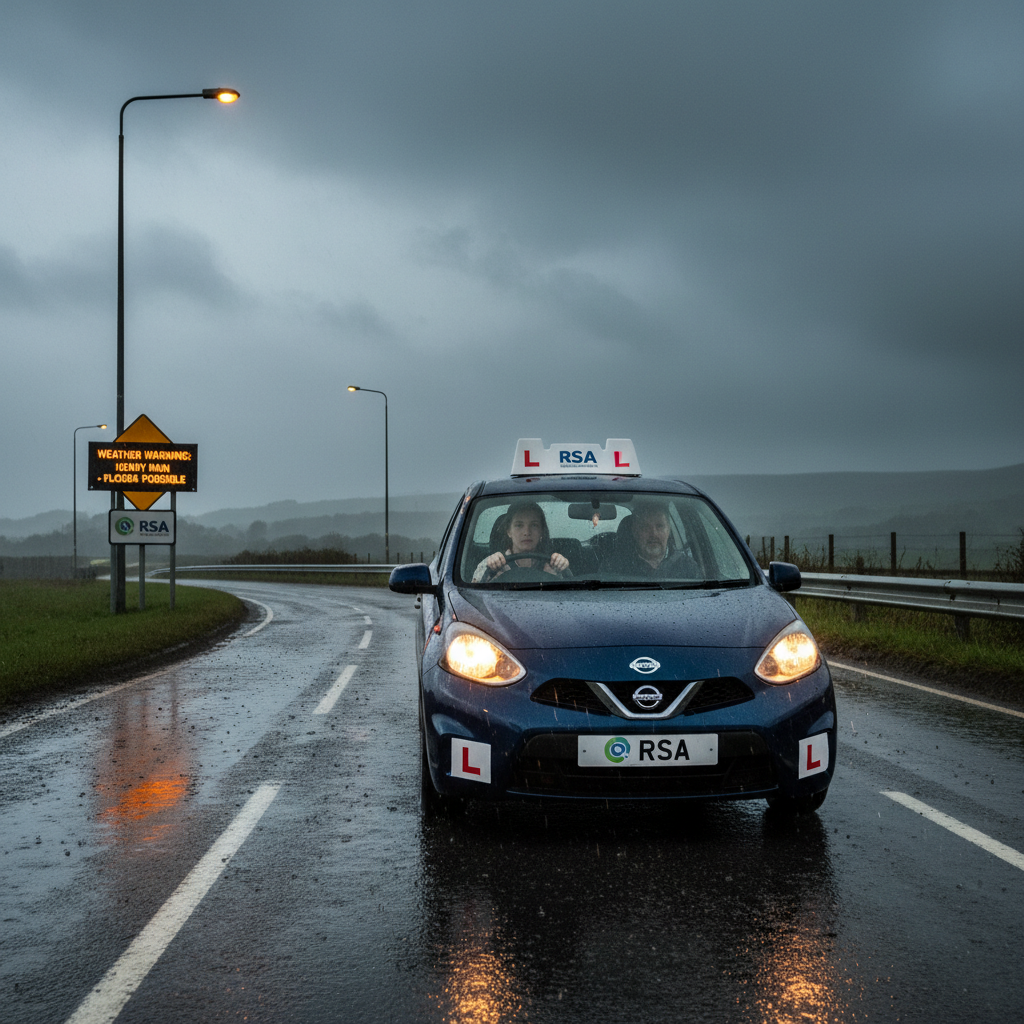
The Road Safety Authority (RSA) has issued a reminder to drivers in Cork and the wider southern counties to slow down and take extra care as heavy rain and weather warnings continue. Wet conditions can turn routine journeys into challenging ones very quickly, especially for learner drivers and newly-qualified motorists. Below we explain the main risks, share practical steps to stay safe, and offer useful tips tailored to learner drivers driving on Irish roads.
Why heavy rain matters on Irish roads
Heavy rain reduces visibility, increases stopping distances and can create standing water or sudden flash flooding on low-lying stretches of road. In Cork and other southern counties, where rural roads and country lanes are common, water can pool in dips and on approaches to bridges, making them deceptively hazardous. Spray from larger vehicles can also obscure your view and make it harder for other road users to see you.
The RSA’s advice is simple but important: adjust your driving to the conditions. That means reducing speed, leaving extra space, and being prepared for unexpected hazards such as surface water, fallen branches or slippery leaves.
Practical advice for all drivers
Whether you’re familiar with the route or just passing through Cork city or the county’s rural roads, consider these practical actions:
- Slow down: Speed limits are for ideal conditions. Wet roads demand lower speeds to maintain control and stop safely.
- Increase following distance: Give yourself at least double the normal space to the vehicle ahead to allow for longer braking distances.
- Use lights: Dipped headlights help you see and be seen in heavy rain—use them even in daylight when visibility is poor.
- Avoid standing water: Do not drive through deep or fast-flowing water. If in doubt, turn around and find an alternative route.
- Watch for spray: When following large vehicles, drop back further—the spray they create can mask potholes and other hazards.
- Aquaplaning response: If your car starts to aquaplane, lift off the accelerator, keep the steering wheel steady and avoid harsh braking until grip returns.
Preparing your car
Before you set out, take a moment to check your vehicle. Tyres with adequate tread, functioning wipers and working lights are small checks that make a big difference. Make sure windscreen washer fluid is topped up and that your phone is charged in case you need to call for help.
Extra guidance for learner drivers in Ireland
Learner drivers face additional challenges in poor weather. If you are still holding a learner permit, consider postponing non-essential journeys during heavy downpours. If you must drive, ensure your supervising driver is experienced, calm and ready to give clear instructions.
Here are learner-specific tips to help build confidence while staying safe:
- Ensure your supervising driver is fully licensed and comfortable driving in wet conditions.
- Stick to familiar routes with good visibility and fewer complex junctions.
- Practice gentle steering, smooth acceleration and early braking—harsh inputs increase the likelihood of losing control.
- If visibility is poor, consider pulling into a safe layby and waiting for the rain to ease rather than completing a stressful drive.
- Remember your L-plates and reflective markings must be clear and visible to other road users in poor weather.
What to do in an emergency
If you become stranded, turn on hazard lights, stay with the vehicle where it is safe, and call emergency services if you are at risk. If water is rising quickly, leave the vehicle and move to higher ground when it is safe to do so.
Planning your journey
Before you travel, check weather forecasts and local traffic updates. The RSA and Met Éireann provide warnings and advice—use them to pick the safest time and route for your trip. Allow extra time so you don’t feel pressured to speed or take chances. If your route includes narrow country lanes or low bridges, be mindful that these can become treacherous in heavy rain.
Conclusion
Heavy rain affects everyone on the road, but thoughtful planning and adjusted driving behaviour reduce the risk. The RSA’s message is clear: be visible, be patient, and give yourself extra space. For learner drivers, this is also an opportunity to build safe driving habits under supervision. Stay safe out there—especially during the current warnings across Cork and the southern counties.
Source – https://news.google.com/rss/articles/CBMiugFBVV95cUxQcThLOTJfZk9kcUJhRnJacnFGUXlpSnlwWS04R1pwOG5nN0JZWHM1MzZ1VkdfZC1WVzRabHllQ3BjamhDS3cxS1pJV0ZQRG9TQTlHZWtqQ3ZsNU5ldEpoNjc0clhXb3NFcnQ1X0pxUzZsb3hLZU5jMFE0dnRlLTlaY2RCU3UwVU5DblIyd3pEc0FQZmxiZkpqcEdFMFVSbV9Gcld6WUVwNVhDNTRaajJ4RTkwdTRoVExlblE?oc=5