
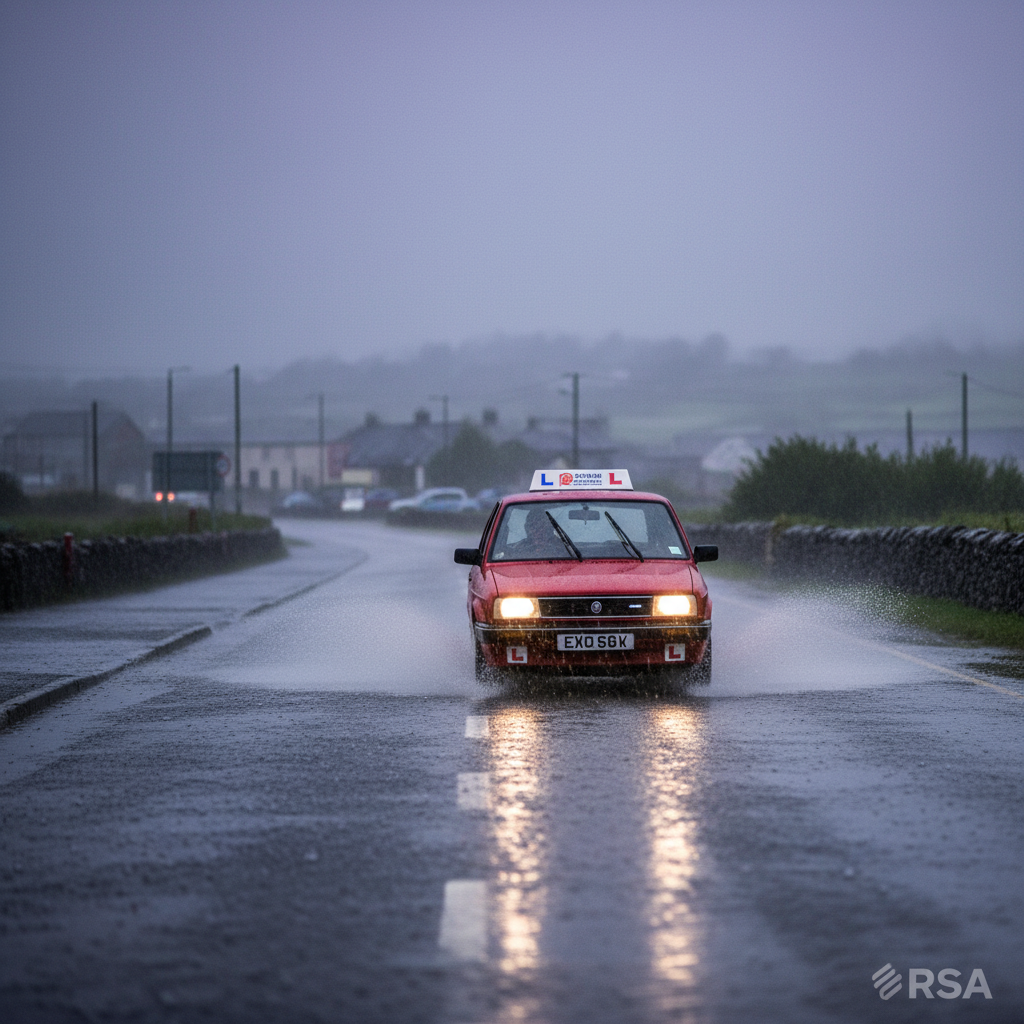
Met Éireann has issued a Status Yellow rain warning for Galway, and the Road Safety Authority (RSA) is urging drivers to take extra care on the county’s roads. Heavy rain can turn familiar routes into tricky stretches, especially for learner drivers who may have less experience managing spray, standing water and sudden drops in visibility.
What a Status Yellow rain warning means for drivers
A Status Yellow warning signals that weather may cause some disruption and that people should be aware of potential hazards. For drivers in Galway this typically means:
- Periods of heavy rain leading to surface water and standing water on roadways;
- Spray reducing visibility for you and other road users;
- Possible localised flooding on low-lying and minor roads; and
- Slippery conditions on bends, junctions and rural lanes.
These conditions affect all road users, but learner drivers and newly qualified motorists should be particularly cautious. Less experience means it’s harder to predict how a vehicle will handle on a wet surface, so slower, more defensive driving is sensible.
Practical tips for learner drivers in Ireland
Below are clear, practical actions learner drivers and their supervisors can take to reduce risk during a yellow rain warning. These reflect common-sense advice from the RSA and experienced driving instructors:
- Delay non-essential journeys: If the rain is heavy, consider postponing lessons or drives until conditions improve.
- Check your vehicle before setting off: Ensure tyres have adequate tread, wipers work effectively and lights are functioning.
- Reduce your speed: Wet roads need longer braking distances. Drive well below the speed limit if conditions are poor.
- Increase following distance: Aim for at least double the normal gap to the vehicle ahead to allow for spray and sudden braking.
- Avoid standing water: Driving through deep water can cause loss of control or engine damage. Turn around if you can’t judge the depth safely.
- Use dipped headlights: Make your vehicle visible; full beam can cause glare in rain and spray.
- Be gentle with controls: Smooth, gradual steering, acceleration and braking reduce the risk of skids or aquaplaning.
- Consider lesson adjustments: In heavy rain, ask your instructor to focus on low-speed control or theory rather than higher-speed motorway practice.
Why these tips matter
Learner drivers are still developing hazard perception and vehicle control skills. Heavy rain changes how a car responds — steering can feel heavier, brakes may take longer to bite, and the road surface offers less grip. Practising calm, deliberate inputs now builds confidence for future wet-weather driving.
Planning your journey and vehicle checks
Preparation reduces stress. Before you leave home or the driving school, run through a short checklist:
- Tyre tread depth and pressure — low tread increases aquaplaning risk.
- Wiper blades and windscreen washer reservoir — clear visibility is vital.
- All lights working — dipped headlights, indicators and brake lights.
- Brakes feel normal — if spongy, get them examined before driving in poor weather.
- Plan your route to avoid minor roads known to flood and pick main roads where possible.
Also keep an eye on local updates. Follow Met Éireann forecasts and local council advice; road closures or diversions may appear at short notice, especially on rural routes or near the coast in Galway.
Conclusion
When the RSA advises caution during a Status Yellow rain warning, the best approach is to slow down, stay visible, and drive defensively. For learner drivers, it’s an opportunity to build wet-weather skills under supervision—preferably on quieter roads—rather than pushing to complete a lesson in unsafe conditions. If in doubt, postpone the journey or speak to your instructor.
Stay safe out there, mind the spray on the N-roads and regional lanes, and remember that small adjustments in speed and spacing make a big difference when the weather turns.
Source – https://news.google.com/rss/articles/CBMixwFBVV95cUxPQUZWaC1vRTRYMlFRbXR5SXBSWjJtYVBnbmlrSU0zSUhOOFJsU09JWGZmcWFlaFcxN0kxbUZwSXVWOEFxdVRIR0FDVHczdWxaSXg4TTdZZHd4MTY1U3g4RUtnVVNhZ0JNdEd5QnZPbEs0V1YwUUkySDM1aHkxOXhGOFBjOG53dVg0MTgxRG9VNTdVaHd6QVhMU3N2S3NSQ051ZzZ0S2doLVk3SnZvNW9XMncwbnZBMWxEaTNUVlNkNFVOaVlqd1VB