Modern cars are packed with technology designed to keep you safe, but do you know what each feature actually does? From the moment you buckle up, a network of sensors, airbags, and electronic systems is working to protect you. In this guide, we’ll break down the most important safety features, explain how they work, and why they matter—especially on Irish roads where conditions can change in an instant.
Who This Is For
This article is for:
- New drivers learning about car safety for the first time
- Experienced drivers considering a new car purchase
- Anyone preparing for their driving test and wanting to understand safety systems
- Parents teaching their teens about responsible driving
Why Vehicle Safety Features Matter
According to the Road Safety Authority, driver behaviour and vehicle safety both play crucial roles in reducing road fatalities. While good driving habits are essential, having the right safety features can mean the difference between a close call and a serious accident. Modern safety technology acts as a co-pilot, helping you avoid danger and protecting you when the unexpected happens.
Essential Safety Features Every Driver Should Know
1. Airbags and Seatbelts
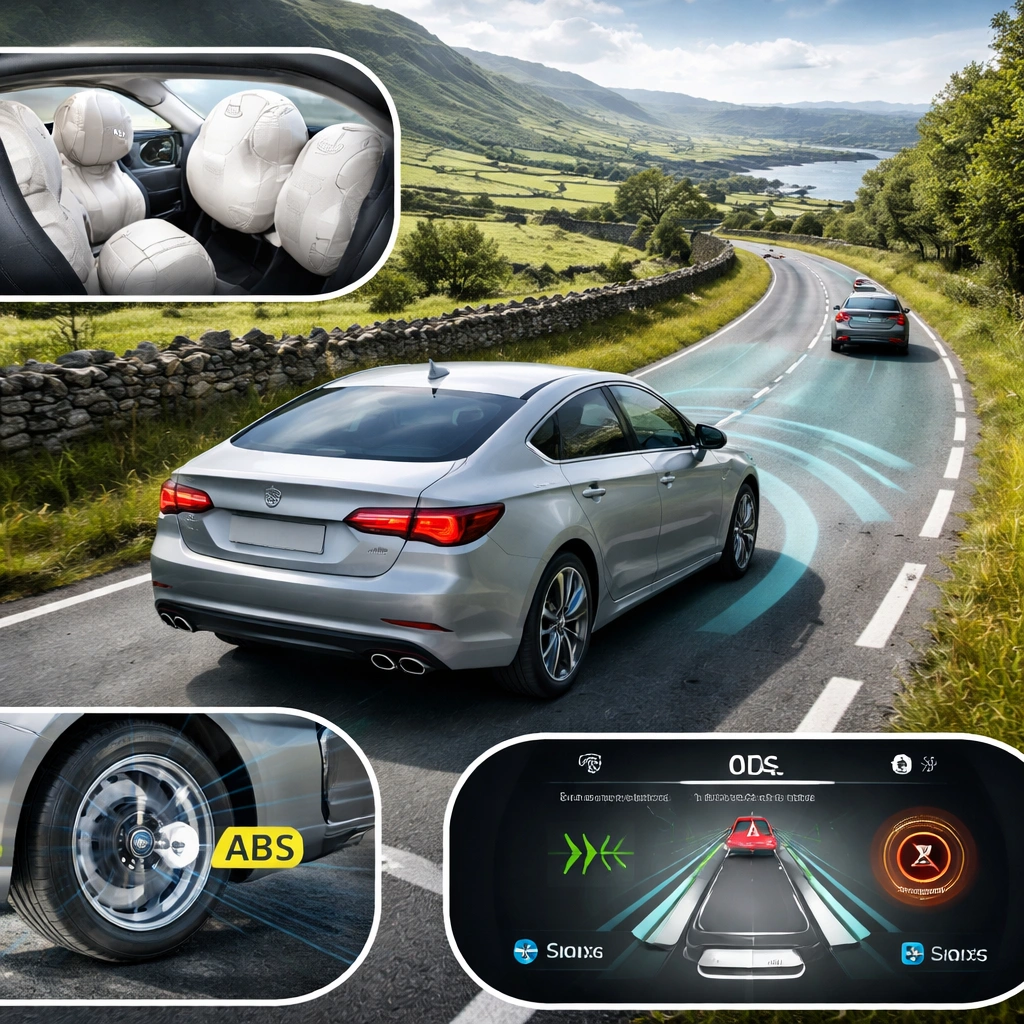
The dynamic duo of car safety. Airbags deploy in milliseconds during a collision, cushioning impact and reducing injury risk. Seatbelts keep you securely in place, preventing ejection and working with airbags for maximum protection. Always ensure seatbelts are worn correctly—across the chest and hips, not under the arm.
2. Anti-lock Braking System (ABS)
ABS prevents your wheels from locking up during hard braking, allowing you to maintain steering control. This is especially useful on wet Irish roads where skidding is a real risk. If you feel the brake pedal pulsing during an emergency stop, that’s ABS doing its job.
3. Electronic Stability Control (ESC)
ESC helps prevent skidding by automatically applying brakes to individual wheels when it detects loss of traction. It’s particularly valuable on rural Irish roads with sharp bends or during sudden evasive manoeuvres.
4. Tyre Pressure Monitoring System (TPMS)
Under-inflated tyres reduce handling and increase stopping distances. TPMS alerts you when tyre pressure drops below safe levels, helping prevent blowouts and improving fuel efficiency—important for those long drives across Ireland.
5. Advanced Driver Assistance Systems (ADAS)
These include features like lane departure warning, blind-spot monitoring, and automatic emergency braking. While not a substitute for attentive driving, they provide valuable extra awareness, especially during motorway driving or in heavy traffic.
Common Mistakes Drivers Make With Safety Features
- Disabling safety systems because they find warnings annoying
- Assuming technology will prevent all accidents
- Ignoring dashboard warning lights
- Failing to maintain safety equipment (like checking airbag indicators)
- Over-relying on ADAS without staying alert
What to Expect During a Vehicle Safety Check
When you bring your car in for a service or NCT, technicians will check:
- Airbag system functionality
- Seatbelt condition and locking mechanisms
- Brake system including ABS sensors
- Tyre condition and pressure
- Lighting systems (important for Irish winter driving)
Regular maintenance ensures these systems work when you need them most.
Manual vs Automatic Safety Features Comparison
| Feature | Manual Cars | Automatic Cars |
|---|---|---|
| ABS | Standard in modern vehicles | Standard in modern vehicles |
| ESC | Available in most models | Available in most models |
| ADAS | Optional on many models | Often included in higher trims |
| Driver attention | Requires manual gear changes | Allows more focus on surroundings |
| Maintenance | Generally simpler systems | More complex electronics |
Tips for Maximising Your Vehicle’s Safety
- Read your car’s manual to understand all safety features
- Never disable safety systems unless absolutely necessary
- Keep sensors and cameras clean for ADAS to function properly
- Replace worn tyres immediately—they’re your first line of defence
- Practice emergency braking in a safe location to understand your car’s capabilities
Why Understanding Safety Features Matters for Learners
As a learner driver, knowing how safety features work helps you:
- Pass your driving test with confidence
- Drive more safely from day one
- Make informed decisions when buying your first car
- Understand what to check during pre-drive inspections
At Epic Driving School, we incorporate safety feature education into our lessons, ensuring you’re not just learning to pass a test, but to drive safely for life.
Frequently Asked Questions
1. Do all modern cars have the same safety features?
No, safety features vary by make, model, and trim level. While basic features like airbags and ABS are common, advanced systems like automatic emergency braking may only be available on higher-spec models or as optional extras.
2. Can safety features replace good driving habits?
Absolutely not. Safety features are designed to assist and protect, but they cannot compensate for poor driving decisions. Always maintain safe following distances, obey speed limits, and stay alert.
3. How often should safety features be checked?
Have your vehicle serviced annually, and check dashboard warning lights weekly. If any safety system warning appears, get it checked immediately by a qualified mechanic.
4. Are safety features tested during the driving test?
While you won’t be tested on every feature, you should understand basic safety systems like ABS and know how to use seatbelts correctly. Your driving instructor will guide you on what’s essential for the test.
5. Do electric vehicles have different safety features?
EVs often include additional safety features due to their heavy battery packs, such as reinforced structures and specialised stability control. However, core safety systems like airbags and ABS are similar to conventional vehicles.
6. What’s the most important safety feature?
While all safety features are important, seatbelts are statistically the most effective at saving lives. Always wear yours correctly, and ensure all passengers do the same.
Ready to Drive with Confidence?
Understanding vehicle safety features is just one part of becoming a skilled, confident driver. Whether you’re a complete beginner or looking to refresh your skills, Epic Driving School offers comprehensive lessons that cover everything from basic controls to advanced safety awareness.
Our experienced instructors will help you understand not just how to drive, but how to drive safely in all conditions. Contact us today to book your first lesson and start your journey toward becoming a safer, more confident driver.