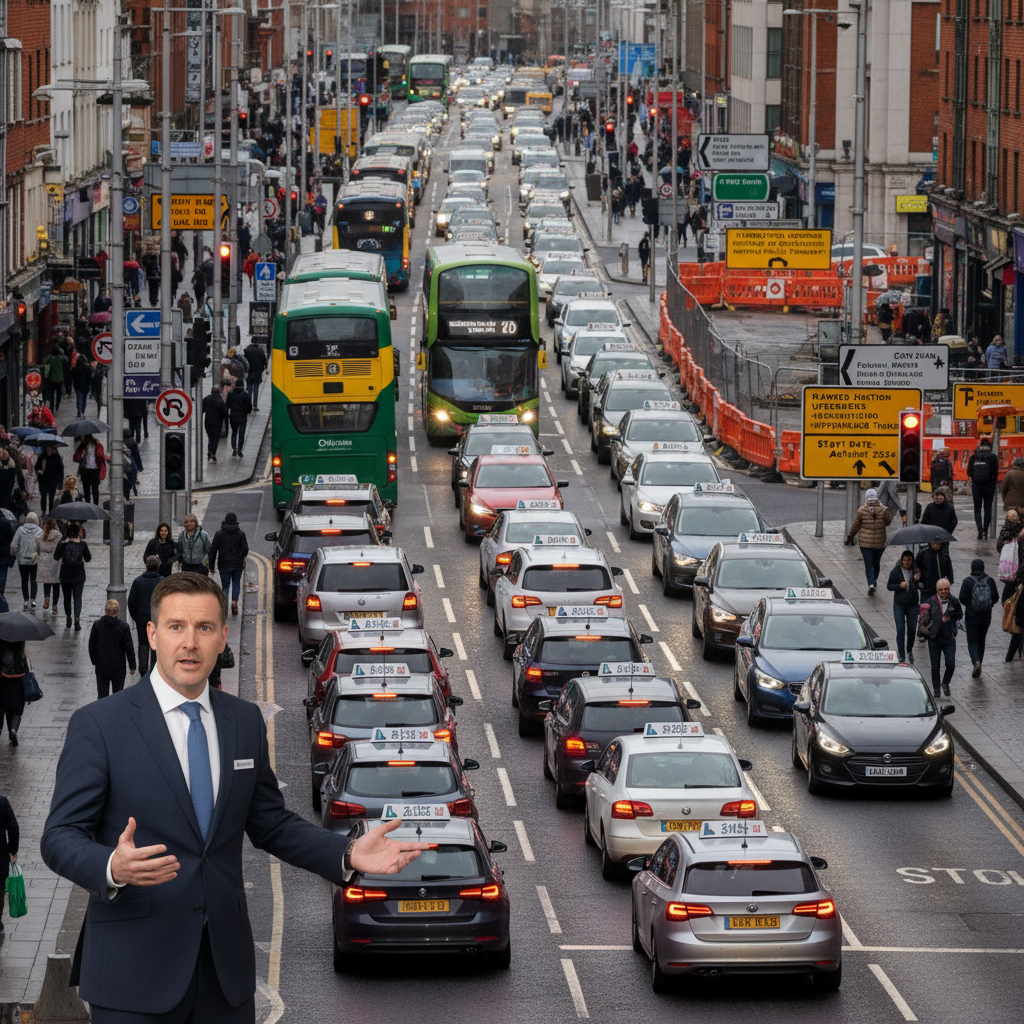
Traffic problems on key commuter routes affect everyone — drivers, bus passengers, cyclists and local businesses. Recently, Callan publicly called for concerted action to fix the long-standing congestion on the Dublin Road. The issue is familiar to many of us in the Greater Dublin area and surrounding counties: longer journeys, stressful school runs, and extra wear on vehicles. As a local driving school, we explain what this means for ordinary drivers and learner motorists, and offer practical advice on coping with the squeeze.
What Callan is asking for
Callan’s appeal is straightforward: it’s time to reduce chronic congestion on the Dublin Road with targeted, practical measures. While the specifics will need input from transport authorities and local councils, ideas commonly suggested include junction upgrades, smarter traffic signal timing, bus priority lanes, improved pedestrian crossings and active travel links. These measures aim to move people more efficiently whether they are driving, biking or using public transport.
Local voices often highlight that piecemeal fixes don’t always solve the root problems. What Callan is stressing is a co-ordinated plan — one that balances traffic flow, safety, and quality of life for residents along the route.
Why this matters for drivers and learner motorists
For experienced drivers, congestion means delayed commutes, wasted fuel and increased frustration. For learner drivers the effects are more nuanced but significant. Learners need real-world experience in varied conditions — including busy arterial roads like the Dublin Road — yet congestion can create intimidating situations: tight gaps, impatient drivers, and complex junctions. A long-standing bottleneck can limit safe practice opportunities during usual lesson times.
Improvements to the road could make learning to drive safer and more consistent. Better junction design and clearer signage reduce uncertainty. Bus lanes and improved pedestrian facilities encourage modal shift, which in the long run can ease peak-time vehicle numbers and make training environments less stressful.
What kinds of solutions work?
- Junction upgrades — redesigning key intersections or adding turning lanes can remove pinch points.
- Signal optimisation — adaptive traffic lights that respond to flow can reduce queueing.
- Public transport priority — bus lanes and priority measures make public transport faster and more attractive.
- Active travel improvements — dedicated cycle lanes and safe crossings encourage walking or cycling for shorter journeys.
- Local traffic management — parking, loading bays and delivery times can be managed to reduce daytime obstruction.
Practical tips for learner drivers in Ireland
Whether you’re preparing for lessons or the driving test, here are some practical pointers if you’ll be practicing on or near busy roads like the Dublin Road:
- Plan lessons outside peak hours at first — late morning or early afternoon can be calmer for building confidence.
- Practice defensive driving: keep a safe following distance, anticipate junctions and avoid rushing into gaps.
- Familiarise yourself with common junction types and roundabout approaches used locally — these are test favourites.
- Use quieter connecting roads to practise clutch control, hill starts and slow manoeuvres before moving onto busier sections.
- Observe public transport priority areas and know the rules for bus lanes — they’re increasingly common in Dublin suburbs.
- Prepare for Irish weather: rain and spray reduce visibility and braking distances, so adapt speed and spacing accordingly.
- Communicate with your instructor: tell them when you feel uncomfortable and ask for step-by-step guidance during busy stretches.
How communities can help shape solutions
Action on congestion usually needs several parties working together: local councillors, the National Transport Authority, road safety bodies such as the RSA, and community groups. If you’re affected, consider raising the issue with your local councillor or participating in public consultations. Small local changes — clearer signage, better pedestrian crossing points outside schools, or timed delivery restrictions — can add up to meaningful relief.
Conclusion
Callan’s call to end congestion on the Dublin Road is a reminder that transport problems are fixable when local leaders, authorities and communities work together. For learner drivers, the good news is that many proposed measures not only ease delays but also create safer, more predictable driving environments. Meanwhile, practising safe, patient driving and choosing lesson times wisely will help learners build the skills they need to handle busy roads with confidence.
Source – https://news.google.com/rss/articles/CBMihwFBVV95cUxPRkdFVUVmbTEwX3ItQ0NRZ0ZIejV5VTd1TWZ0OXowWnVPb3VoZFc4T21uNlFTbTc4dnV1QlA2TmxPWUMyckNrOEhYd3Nyc3R6bHhoMGFyVVg1eHdMaUxtZ3RlODhGOTdTUWw2VlpNZFZnZjcwTWdadU5UVjQ3Q0QwLVF6Q3U0RVE?oc=5