Introduction
Local media have reported two separate road traffic collisions in County Cork this week. Emergency services and An Garda Síochána attended the scenes, with reports still emerging about circumstances. Although details are limited, these incidents highlight why vigilance and good habits matter, particularly for learner drivers who are still building experience on Ireland’s roads.
What we know so far
At the time of reporting, Gardaí and ambulance crews were involved in responding to both collisions. Local sources describe the events as two distinct incidents, rather than a single crash involving multiple vehicles. No definitive information about causation or injuries has been released publicly, and investigations are ongoing.
When collisions occur in Cork — whether on busy city streets, suburban routes or quieter county roads — response times and road conditions (including weather and visibility) can all influence outcomes. The Road Safety Authority (RSA) and Gardaí routinely advise caution and cooperation with emergency services at any incident.
Why this matters to learner drivers in Ireland
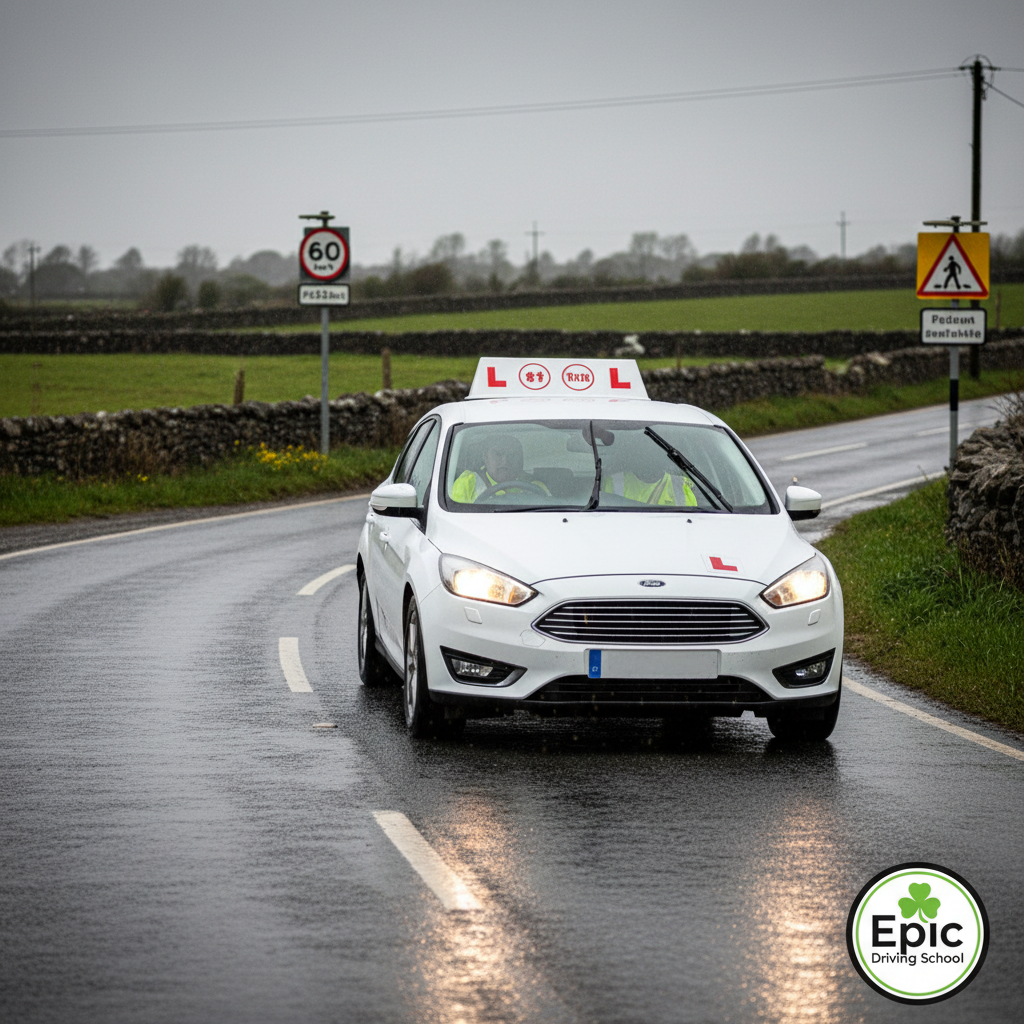
Learning to drive in Ireland means adapting to a wide range of conditions: narrow rural roads, busy urban junctions, and frequently changing weather. Two recent collisions in Cork are an important reminder that experience alone doesn’t prevent accidents; proactive habits do. If you hold a learner permit, you’re still building the habits that will keep you and others safe.
Common factors in collisions include speed that is inappropriate for conditions, distractions (including mobile phone use), and misjudging gaps at junctions. For learner drivers, these are areas to focus on during lessons:
- Judgement and speed management: Slowing down earlier in poor weather and approaching junctions with caution helps prevent last-second mistakes.
- Observation skills: Good mirror use and scanning the road ahead reduce surprises.
- Hazard awareness: Expect the unexpected on rural roads and in built-up areas — cyclists, agricultural vehicles and pedestrians are common.
Practical steps if you’re involved in or witness a collision
Even as a learner, it’s useful to know the right things to do immediately after a collision:
- Stop and make the scene safe if you can — switch on hazard lights and, where possible, move vehicles out of traffic.
- Check for injuries and call 999/112 for emergency help if anyone is hurt.
- Exchange names, addresses, vehicle registration details and insurance information with the other parties involved.
- Report the collision to Gardaí if there are injuries, suspected serious damage, or if a driver is unfit to drive.
- Take photos of the scene and vehicle damage — these can help later with insurance or Garda reports.
Practical tips for learner drivers in Cork and across Ireland
Here are actionable suggestions you can practise on lessons or when supervised driving:
- Drive to the conditions, not just the speed limit — wet roads, fog and high winds are common in Ireland and demand extra caution.
- Keep a safe following distance; the two-second rule is a minimum in good conditions and should be increased when it’s wet or icy.
- Avoid distractions: put your phone out of reach, and if you need directions use a passenger or a pre-set route on a phone holder while stationary.
- Practice smooth steering and braking — sudden movements can unsettle the car and other road users.
- Know your paperwork: carry your learner permit, insurance details, and have your supervising driver’s details ready when needed.
- Refresh first aid basics and know how to contact emergency services in Ireland (999/112).
- Make the most of professional lessons; an experienced instructor can show you how to handle tricky local routes around Cork city and county.
Conclusion
Two reported collisions in Cork should serve as a sober reminder that road safety requires constant attention — especially for learner drivers gaining experience on a variety of Irish roads. Keep practising safe habits, use guidance from the RSA and your instructor, and always stop and seek help if you are ever involved in a collision. Small, consistent steps will make you a safer driver for life.