The Role of Insurance in Driving Lessons
If you’re starting driving lessons in Ireland, insurance is probably not the first thing on your mind. You’re likely thinking about clutch control, roundabouts, and that dreaded hill start. But insurance is a crucial part of the process. It’s the safety net that protects you, your instructor, and other road users while you’re learning.
Understanding how insurance works during your Essential Driver Training (EDT) and private practice can seem confusing at first. Here’s a straightforward guide to what you need to know, how it affects your learning, and how to make sure you’re always covered.
Who this is for
This guide is for anyone starting their driving journey in Ireland. Whether you’ve just booked your first lesson with a registered instructor or you’re a parent helping your teenager get on the road, knowing the insurance rules is essential. It’s particularly useful for learner drivers who plan to practice outside of their official EDT lessons with a family member or friend.
Why Insurance Matters (Even for Lessons)
While your driving school instructor will have comprehensive insurance covering the vehicle during your lessons, the rules change the moment you step out of the car to practice independently. As a learner driver, you are legally required to be insured to drive any vehicle on a public road. This applies even if you are driving a family car with a parent in the passenger seat. Without proper insurance, you could face penalty points, fines, or even a court summons. More importantly, if an accident occurs, you could be held personally liable for all damages.
Step-by-Step: Getting Your Insurance in Order
1. Understand Your Instructor’s Coverage
First, the easy part. When you are sitting in the driver’s seat of a driving school car during a paid lesson with a qualified instructor, you are covered by their insurance. This is mandatory for any legitimate driving school in Ireland. This insurance typically covers the vehicle, the instructor, and you (the learner) while driving on public roads as part of the lesson. Don’t be afraid to ask your instructor about their insurance policy; a professional will be happy to explain their coverage.
2. Insurance for Private Practice (EDT and Beyond)
This is where most learners and parents get confused. The logbook (EDT logbook) you receive when you start lessons is a record of your training, but it is not insurance.
Before you can drive outside of your lessons—for example, to get some extra practice with a parent—you need to be insured as a named driver on that vehicle. There are two main ways to do this:
- Being added to a parent’s/guardian’s policy: This can be expensive, as it often involves adding a young, inexperienced driver to a policy, which significantly increases the premium. You’ll need to contact the insurance provider directly.
- Getting standalone learner driver insurance: Many insurers now offer short-term policies specifically for learner drivers. You can get cover for a day, a week, or a month. This can be more affordable if you only plan to practice occasionally before your test.
3. Display Your L-Plates Correctly
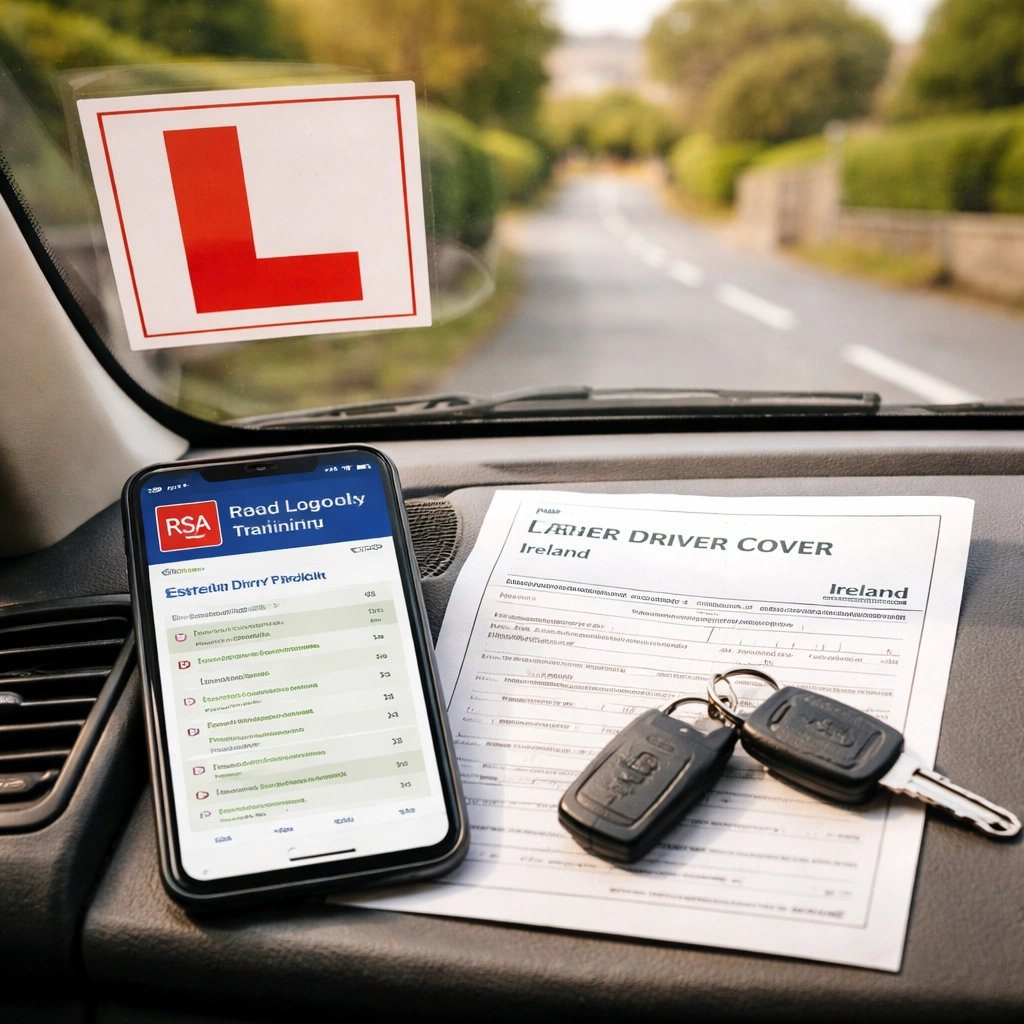
Once you have insurance and are ready to practice, you must display valid ‘L’ plates on both the front and back of the car. These must be clearly visible and not obstructed. If you’re driving a car with a disability registration, you may be exempt, but for most learners, this is a legal requirement.
What to Expect in a Lesson
When you get into the car for your first lesson, the instructor will likely ask for your learner permit. They will check that you have it with you, as it’s a legal requirement. During the lesson, their insurance covers you completely. You can relax and focus on the road.
A typical lesson will cover specific skills, from basic car control to complex junctions. The instructor is in control of the vehicle from a legal and safety perspective. Their dual-control pedals allow them to intervene instantly if needed, adding another layer of safety. After the lesson, they will update your EDT logbook, noting the date, the skills covered, and the duration.
Common Mistakes to Avoid
- Assuming you’re covered automatically: Never drive a family car for practice until you have confirmed you are insured. ‘I’m learning’ is not a valid defence without the correct policy.
- Forgetting your learner permit: You must have your learner permit with you every time you drive, even during a lesson. If you don’t have it, you can be fined.
- Driving alone: It is illegal for a learner driver to drive unaccompanied on any public road. You must always be accompanied by a qualified driver (fully licensed for at least two years) who is sober and competent to take control of the vehicle.
- Not updating your insurer: If you pass your test, you must inform your insurance provider immediately. Your learner driver policy will not cover a fully licensed driver, and driving without valid insurance is an offense.
Manual vs Automatic: Does Insurance Differ?
The type of transmission you learn in doesn’t usually affect the insurance process for lessons, as your instructor’s policy covers you. However, it can influence the cost and availability of private practice insurance and your long-term driving costs. Here’s a quick comparison:
| Feature | Manual | Automatic |
| :— | :— | :— |
| **Learning Curve** | Generally steeper (clutch control, gear changes) | Often easier (no clutch, fewer gears) |
| **Lesson Cost** | Standard rate | May be slightly higher due to vehicle cost |
| **Private Insurance** | Can be cheaper if you practice in a manual family car | Can be more expensive as automatic cars often cost more to repair/replace |
| **Driving Test** | Full manual license allows you to drive both manual and automatic | Automatic license restricts you to automatics only |
| **Resale Value** | Wider market for manual cars in Ireland | Automatics are growing in popularity |
Why Choose Epic Driving School?
At Epic Driving School, we make the learning process as straightforward as possible. Our instructors are registered with the Road Safety Authority (RSA) and fully insured for all lessons. We guide you through every step of your EDT, from your first lesson to your pre-test preparation. Our goal is to build your confidence and help you pass your test safely, ensuring you understand all the requirements, including the importance of proper insurance cover.
FAQs
Do I need my own insurance for my first driving lesson?
No. Your instructor’s insurance covers you during the lesson. However, you must have a valid learner permit with you.
Can I drive my parent’s car after just one lesson?
No. To drive your parent’s car for private practice, you must be added to their insurance policy or take out a separate learner driver policy. The lesson itself is not proof of insurance.
How does EDT affect my insurance?
EDT itself is a training log. Insurers may view completing your EDT with a registered instructor favourably, but it is not a direct substitute for an insurance policy when practicing privately.
What happens if I have an accident during a lesson?
Your instructor’s insurance will cover the vehicle and any third-party damages. The instructor will guide you through the immediate steps, including contacting their insurer and the gardaí if necessary.
Can I practice for my test without EDT?
While you legally need a learner permit to drive, completing your 12 EDT lessons is strongly recommended and often required by insurers for private practice cover. It’s the best way to prepare for your test.
Does my insurance cover me for the driving test?
Typically, you will use an insured driving school car for your test. If you use a private car, you must ensure it is fully insured and taxed, and you must have valid NCT if required. Check with your insurer specifically about test day coverage.
What if I only want to practice in an automatic car?
You can get insurance for an automatic car, but remember you will only be licensed to drive automatics. If you later want to drive a manual, you’ll need to retake your test.
How long is my learner permit insurance valid?
Insurance is valid for the period specified in your policy, usually 30 days for short-term cover or aligned with your parent’s policy renewal. Always check the expiry date.
Next Steps: Book Your First Lesson
Feeling more clued in about the insurance side of things? That’s great. The best way to start your driving journey is with a professional instructor who can guide you through every rule of the road. Book your first lesson with Epic Driving School today, and we’ll help you navigate the path from learner permit to full driving license with confidence.
Ready to get started? Book your first lesson online now or get in touch with our team if you have any questions about insurance or EDT.